钻
Character Story & Explanation
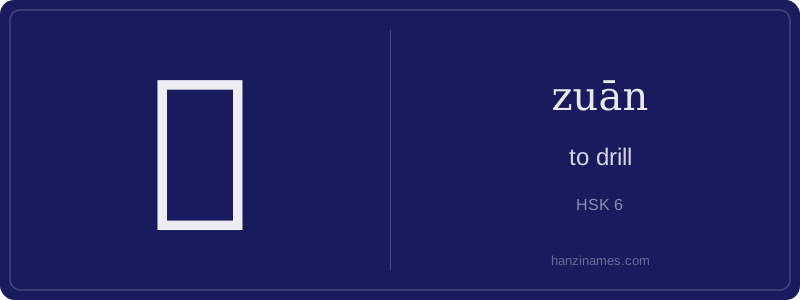
钻 is widely used in modern Chinese for both physical drilling (e.g., construction, dentistry) and figurative deep engagement (e.g., 钻研 — 'to research intensively', a key term in academic and technical education). A well-documented phrase is 钻研业务 ('study one’s profession diligently'), commonly seen in workplace training materials since the 1950s. It also appears in the idiom 钻牛角尖 ('to argue over trivialities'), attested in Ming-Qing vernacular literature and still used today in spoken Mandarin.
The character evolved from seal script, where 钅 (metal radical) was added later to clarify meaning, while 占 served as the phonetic component. There's no pictographic origin (like sun or tree); it's a phono-semantic compound. In daily life, you’ll see 钻 on tool packaging, university research posters, and even in WeChat group names like 'AI算法钻研社' ('AI Algorithm Study Group').
Hi there! Let’s explore the character 钻 (zuān). It’s a Level 6 HSK word — not beginner-friendly at first glance, but very logical once you break it down. The left side 钅 (jīn) is the ‘metal’ radical — telling us this character relates to tools or materials made of metal. The right side 占 (zhān) gives the sound and hints at 'occupying' or 'pressing into' — think of a drill bit pressing firmly into a surface. So, literally: 'metal that occupies/penetrates' → to drill.
This character shows how Chinese combines meaning (radical) and sound (phonetic component) elegantly. Note that 钻 has two pronunciations: zuān (verb: to drill, to delve) and zuàn (noun: diamond, drill bit). This tone-based part-of-speech shift is common in Chinese — same spelling, different tones, different grammar roles. Don’t worry if it feels tricky; even native speakers double-check the tone in writing!
As a verb, zuān often appears in both literal and metaphorical contexts: drilling a hole, drilling into a subject (like studying deeply), or even 'drilling through' obstacles (e.g., bureaucracy). Its flexibility makes it useful beyond construction sites — it’s in academic, tech, and even internet slang (e.g., 钻牛角尖 — 'to split hairs'). Practice saying zuān with the first tone (flat, high pitch), and remember: no rising or falling — just steady pressure, like a drill!
Example Sentences
Common Compounds
Similar Characters — Don't Mix These Up
Your First Step into Chinese Culture: Get a Chinese Name
Every journey into Chinese begins with a name. Use our free Chinese name generator to create a meaningful, personalized Chinese name that fits you perfectly.
Get My Chinese Name →