馋
Character Story & Explanation
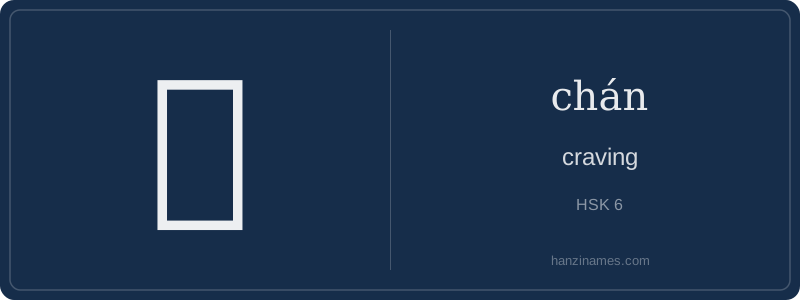
In daily life, chán is ubiquitous in spoken Mandarin and informal writing—especially in food media, parenting, and light-hearted banter. It appears in fixed phrases like ‘嘴馋’ (zuǐ chán, 'mouth-chán' = unable to resist tasty food) and ‘馋嘴’ (chán zuǐ, 'craving-mouth', a common term for a food lover). The idiom ‘馋涎欲滴’ (chán xián yù dī, 'saliva dripping from craving') dates back to Ming dynasty literature, appearing in novels like *Jin Ping Mei*, confirming its long-standing role in vivid descriptive language.
The character’s form is not pictographic but phono-semantic: the left radical 饣 (‘food’) signals meaning, while the right component 惨 (cǎn, originally meaning ‘miserable’) serves as a phonetic loan—though pronunciation diverged over time. No oracle-bone or bronze inscriptions contain chán; it emerged later, likely during the Han dynasty, as written vernacular expanded. Today, Chinese people most commonly use it in sentences like ‘我有点儿馋火锅了’—a real, relatable expression of food longing.
Chán (馋) vividly captures the visceral, almost irresistible pull of craving—especially for food. It’s not just hunger; it’s mouth-watering anticipation, the flutter in your stomach when you smell sizzling cumin-laced lamb skewers on a Beijing night market street. Unlike neutral terms like ‘hungry’ (饿 è), chán carries emotional weight: desire tinged with indulgence, sometimes mild self-reproach. It’s colloquial, warm, and deeply human—used as readily by grandparents teasing grandchildren as by food bloggers describing their latest dumpling obsession.
This character reflects China’s rich food culture, where eating is social, sensory, and symbolic. To be chán is to be alive to flavor—and to admit it openly. In Mandarin speech, it often appears in playful or affectionate contexts: calling someone ‘a little chán pig’ isn’t an insult but endearment. Its usage reveals how Chinese language embeds moral nuance in everyday words—gluttony isn’t always sinful; sometimes it’s charming, relatable, even virtuous when shared around a family table.
Chán also subtly signals cultural values: appreciation for craftsmanship in cuisine, respect for seasonal ingredients, and the joy of communal feasting. When a Shanghainese aunt says, ‘You’re so chán—you’ll try every stall at Yuyuan!’ she’s praising curiosity and presence, not just appetite. Linguistically, chán belongs to the ‘food’ semantic field (radical 饣), reinforcing that cravings are rooted in nourishment—not mere hedonism. Its HSK 6 status reflects its nuanced, context-sensitive use: learners master it only after grasping subtleties of tone, register, and cultural framing.
Example Sentences
Common Compounds
Similar Characters — Don't Mix These Up
Your First Step into Chinese Culture: Get a Chinese Name
Every journey into Chinese begins with a name. Use our free Chinese name generator to create a meaningful, personalized Chinese name that fits you perfectly.
Get My Chinese Name →