庞
Character Story & Explanation
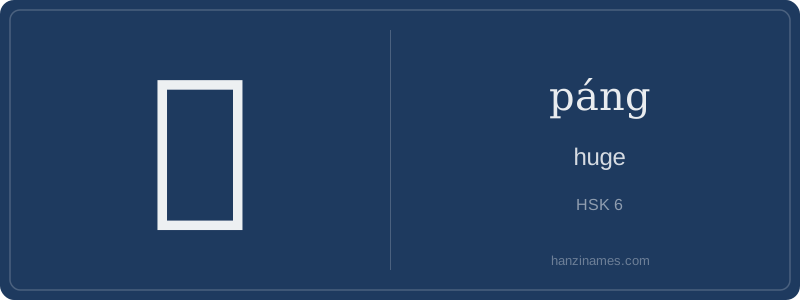
In modern Chinese, 庞 appears most frequently in formal and literary contexts to denote overwhelming scale — especially in phrases like 庞大 (pángdà, 'enormous') and 庞然大物 (pángrán dàwù, 'a huge, imposing entity', often used metaphorically for bureaucratic systems or powerful institutions). It’s documented in classical texts such as the *Zhuangzi*, where 庞然 describes colossal, awe-inspiring phenomena. The term also appears in 20th-century political discourse, e.g., describing the 'massive apparatus' of state organs.
The character is not pictographic — no oracle bone or bronze inscription of 庞 survives. Its earliest verified form appears in Han-dynasty clerical script. Today, Chinese learners encounter it first in compound words; native speakers instinctively associate it with intimidating scale — like a student facing a '庞杂的考试大纲' (pángzá de kǎoshì dàgāng, 'overwhelming exam syllabus').
Our detective work begins at the character’s radical: 广 (guǎng), meaning 'broad' or 'extensive' — a roof-like enclosure suggesting openness and spatial magnitude. This radical anchors 庞, hinting at scale from the outset. The right component, 龙 (lóng, 'dragon'), was historically simplified from a more complex form; though not the modern dragon glyph, early seal script variants show a serpentine, coiling shape evoking power and imposing presence — fitting for 'huge'.
Tracing through clerical script (Lìshū), the character consolidates into its current balanced structure: broad roof over an energetic, angular right side. Unlike pictographs of concrete objects (e.g., 日 for 'sun'), 庞 is a semantic-phonetic compound — 广 conveys meaning (spatial largeness), while 龙 once approximated pronunciation (though modern páng diverges phonetically from lóng, reflecting historical sound shifts in Middle Chinese).
This evolution mirrors cultural priorities: size wasn’t just physical but implied influence, authority, and awe — think of imperial architecture or classical descriptions of cosmic forces. 庞 rarely stands alone; it thrives in compounds like 庞大 (pángdà, 'enormous') or 庞然大物 (pángrán dàwù, 'a huge, imposing entity'), where its weight reinforces conceptual mass. Its HSK 6 status reflects its use in abstract, literary, or formal registers — not daily counting or greetings, but in essays, news analysis, and historical narratives.
Example Sentences
Common Compounds
Similar Characters — Don't Mix These Up
Your First Step into Chinese Culture: Get a Chinese Name
Every journey into Chinese begins with a name. Use our free Chinese name generator to create a meaningful, personalized Chinese name that fits you perfectly.
Get My Chinese Name →