伢
Character Story & Explanation
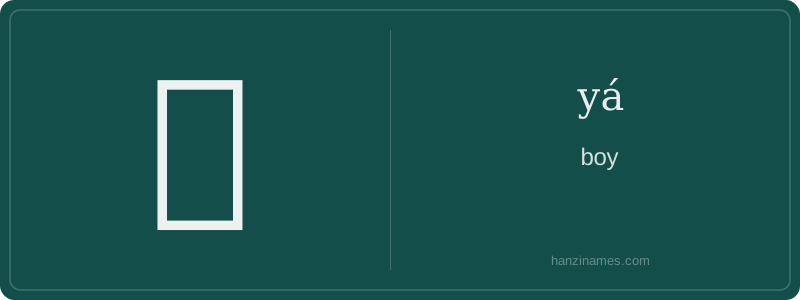
‘伢’ is widely used in spoken and literary Hunanese and Jiangxi dialects, appearing in regional opera lyrics, folk poetry, and contemporary media — such as the 2021 Hunan TV documentary series ‘Hunan Er Ya’ (湖南伢儿), profiling young locals preserving intangible cultural heritage. It’s also found in official publications like the ‘Hunan Provincial Gazetteer’ (《湖南省志》), where ‘伢子’ denotes male youth in sociolinguistic surveys. Though rare in formal writing, its usage is well-documented in linguistic studies of South-Central Mandarin and Xiang dialects.
The character is a semantic-phonetic compound: radical 亻 (person) + phonetic ‘牙’ (yá, ‘tooth’). The phonetic component provides pronunciation only — no etymological link to teeth. Historically, ‘伢’ emerged during the Ming–Qing period as a vernacular variant; its earliest verified printed use appears in 19th-century Xiang dialect texts, not oracle bones or bronze inscriptions.
‘伢’ (yá) is a colloquial, affectionate term for ‘child’, especially common in southern Chinese dialects like Wu and Xiang — most notably in Hunan and Jiangxi provinces. Unlike the standard Mandarin word ‘háizi’ (孩子), ‘伢’ carries warmth, familiarity, and regional identity. It’s often used by elders addressing young boys or in nostalgic, literary contexts to evoke rural childhood or local flavor. While not formal, it appears in modern novels, folk songs, and media depicting southern life.
This character reflects how Chinese language encodes intimacy and geography through vocabulary: ‘伢’ isn’t just ‘child’ — it’s a boy from a village near Changsha, barefoot and grinning, called out by his grandmother across a rice field. In Western terms, it’s closer to ‘lad’ or ‘young’un’ in British English — evoking class, region, and generational closeness more than age alone. Think of ‘mate’ in Australian English or ‘bub’ in Irish — culturally loaded, context-dependent, and rarely found in textbooks.
Culturally, ‘伢’ resonates with Western concepts like ‘scamp’ (mischievous but endearing) or ‘tad’ (American, diminutive and tender), yet differs in being gendered (traditionally male) and dialect-rooted. Unlike universal terms like ‘kid’ or ‘child’, ‘伢’ signals belonging — to a place, a family, a speech community. Its use today is deliberate: writers choose it to ground stories in authenticity, much as an American author might write ‘y’all’ instead of ‘you all’ to signal Southern voice and identity.
Example Sentences
Common Compounds
Similar Characters — Don't Mix These Up
Your First Step into Chinese Culture: Get a Chinese Name
Every journey into Chinese begins with a name. Use our free Chinese name generator to create a meaningful, personalized Chinese name that fits you perfectly.
Get My Chinese Name →