佾
Character Story & Explanation
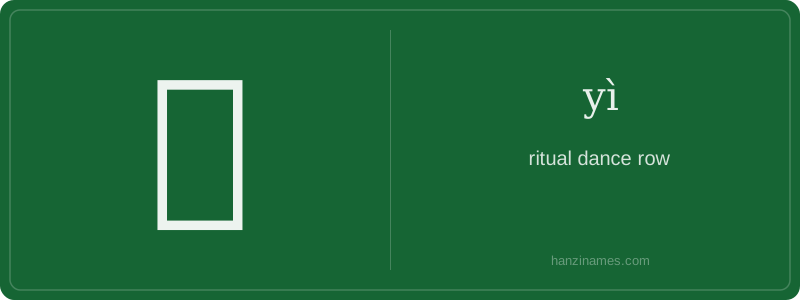
佾 is almost exclusively used in historical, academic, or ceremonial contexts today. You’ll find it in phrases like 八佾舞 (bā yì wǔ, 'Eight-Row Dance') — the highest-level ritual dance performed at the Confucius Temple in Qufu during annual ceremonies. It also appears in classical quotes, such as Confucius’s famous rebuke in the Analects (3.1): ‘八佾舞于庭,是可忍也,孰不可忍也?’ — criticizing a nobleman for using imperial-grade dance in his courtyard. Modern usage is highly specialized: scholars, cultural heritage staff, and ritual performers encounter it regularly.
The character’s form combines 亻 (person) and 月 (moon), but here 月 is a phonetic component (not meaning ‘moon’); its origin traces to bronze script forms depicting aligned human figures. No oracle-bone form survives, but early inscriptions show stylized rows of dancers — confirming its ritual-dance meaning from at least the Warring States period.
Hi students! Let’s learn 佾 (yì), an elegant, ancient character you’ll meet when studying Chinese ritual culture. It has just 8 strokes and belongs to the 亻 (person) radical — reminding us it’s about people performing together. Though rare in daily speech, 佾 carries deep historical weight: it specifically means a row or formation of dancers in ancient state sacrifices, especially Confucian ceremonies honoring ancestors or sages like Confucius.
This character reflects China’s emphasis on harmony, order, and ritual propriety (lǐ 礼). In Zhou Dynasty rites, the number of dancers in each 佾 indicated rank — eight rows (八佾) for the Son of Heaven, six for feudal lords. Using the wrong number was considered a grave breach of etiquette. So 佾 isn’t just about dance — it’s a symbol of social hierarchy and moral discipline.
Don’t worry if you won’t use 佾 in texting or ordering food! It appears mainly in classical texts, museum exhibits, academic discussions, and Confucian temple inscriptions. When you see it, think: ‘ritual precision’, ‘harmonious movement’, and ‘cultural memory’. Mastering 佾 helps you read passages about traditional rites — and appreciate how deeply performance, politics, and philosophy were woven together in ancient China.
Example Sentences
Common Compounds
Similar Characters — Don't Mix These Up
Your First Step into Chinese Culture: Get a Chinese Name
Every journey into Chinese begins with a name. Use our free Chinese name generator to create a meaningful, personalized Chinese name that fits you perfectly.
Get My Chinese Name →