偲
Character Story & Explanation
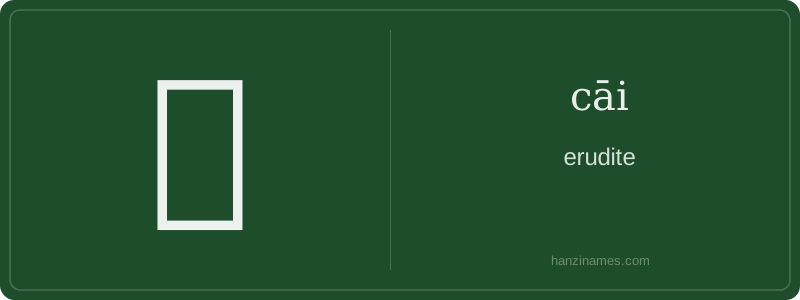
偲 appears in the classic phrase '偲偲君子' (cāi cāi jūnzǐ), from the *Analects* (13.28) and later echoed in the *Book of Songs*, describing earnest, studious gentlemen devoted to self-cultivation. Though rarely used independently today, it survives in surnames (e.g., 偲姓, historically documented in Ming-era genealogies) and academic titles — such as the '偲然讲坛' (Cāirán Lecture Series), a real humanities forum at Peking University launched in 2019 to honor scholarly rigor.
The character 偲 is a phono-semantic compound: the left radical 亻 (person) indicates human qualities; the right component 思 (sī, 'to think') provides both sound (archaic *sai* → modern cāi) and meaning ('reflective, thoughtful'). Its earliest attestation is in bronze inscriptions and Warring States bamboo texts, consistently associated with moral-intellectual refinement — never with casual learning or rote knowledge.
偲 is a rare, literary character meaning 'learned' or 'erudite', used almost exclusively in formal, classical, or poetic contexts. It carries a refined, scholarly connotation — evoking Confucian ideals of cultivated virtue and deep knowledge. Unlike common synonyms like 博学 (bóxué) or 有学问 (yǒu xuéwèn), 偲 appears primarily in fixed expressions, historical texts, or names, lending gravitas and antiquity to its usage.
This character is not part of modern spoken Mandarin and does not appear in the HSK vocabulary lists (HSK Levels 1–6). Its pronunciation cāi is shared with more common characters like 猜 (to guess), but 偲 has no semantic link to guessing — instead, it stems from ancient texts like the *Book of Songs* (*Shījīng*), where it described virtuous, well-instructed gentlemen.
Because 偲 is so infrequent in daily life, even many native speakers may misread it as cāi (its correct reading) or confuse it with similar-looking characters. Its rarity makes it a marker of linguistic sophistication: spotting and correctly using 偲 signals familiarity with classical Chinese literature and traditional naming conventions — especially in scholarly families or academic institutions honoring classical values.
Example Sentences
Common Compounds
Similar Characters — Don't Mix These Up
Your First Step into Chinese Culture: Get a Chinese Name
Every journey into Chinese begins with a name. Use our free Chinese name generator to create a meaningful, personalized Chinese name that fits you perfectly.
Get My Chinese Name →