伧
Character Story & Explanation
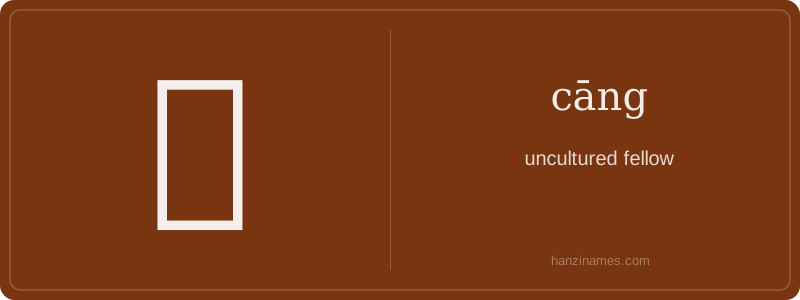
伧 is almost exclusively used in fixed literary compounds—not in daily conversation. Its most enduring appearance is in 寒伧 (hán cāng), meaning 'embarrassingly unsophisticated' or 'tastelessly shabby', frequently found in modern novels and critical essays (e.g., Lu Xun’s contemporaries used it to lampoon petty bourgeois pretension). It appears in no HSK vocabulary list and is absent from spoken Mandarin corpora.
The character has no pictographic origin—it’s a phono-semantic compound: 亻 (person) + 仓 (cāng, phonetic component, also meaning 'granary'). There is no oracle bone or bronze script form; it first appears in Eastern Jin dynasty texts (4th c. CE) as a pejorative term for northern Chinese migrants, documented in the Shishuo Xinyu (A New Account of the Tales of the World).
Our detective work begins with the radical 亻—'person'—a clear signal this character judges human qualities. The right side, 仓 (cāng), originally meant 'granary' but phonetically anchors the reading. In classical usage, 伧 emerged in the Wei-Jin period to mock northern refugees perceived as coarse by southern elites—a linguistic scar of cultural hierarchy, not mere rudeness.
This character is rare in modern speech but thrives in literary and satirical contexts. It never stands alone; it’s always paired—as in 伧俗 or 寒伧—to imply a deeper social failing: lack of refinement, education, or aesthetic sensibility. Its bite lies in implication, not direct insult, making it a precision tool for elite critique.
Unlike blunt synonyms like 粗 (crude) or 土 (rustic), 伧 carries historical baggage: it evokes class tension, regional prejudice, and performative sophistication. Its six-stroke simplicity belies its weight—it’s a lexical fossil preserving a centuries-old urban vs. rural, literati vs. commoner divide. That’s why even today, calling someone 伧 is less about behavior and more about perceived cultural illegitimacy.
Example Sentences
Common Compounds
Similar Characters — Don't Mix These Up
Your First Step into Chinese Culture: Get a Chinese Name
Every journey into Chinese begins with a name. Use our free Chinese name generator to create a meaningful, personalized Chinese name that fits you perfectly.
Get My Chinese Name →