僣
Character Story & Explanation
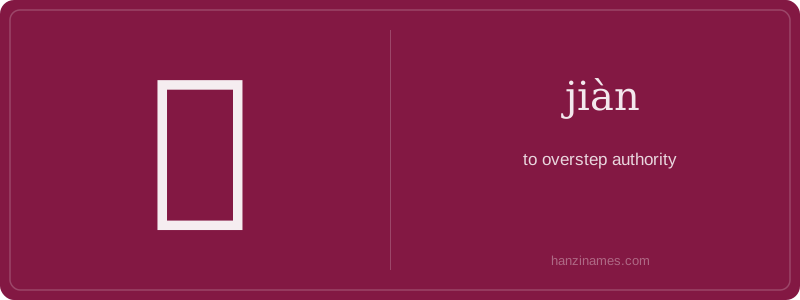
僣 is virtually unused in modern spoken Chinese but appears in classical and historical texts — notably in dynastic histories like the History of the Ming Dynasty (《明史》), where officials were accused of 僣越 (jiànyuè) for using imperial symbols. The compound 僣越 remains the most common usage, appearing in formal critiques of bureaucratic overreach or corporate executives bypassing board authority. It also surfaces in legal-ethical discussions about administrative overreach.
This character is not a pictograph nor ideograph with clear ancient origins; its form evolved from seal script variants of 憸 (xiān), later specialized for 'usurping authority'. No oracle bone or bronze inscriptions contain 僣 — it emerged in late Han to Tang texts as a semantic refinement. Today, Chinese readers encounter it primarily in phrases like '僣越礼制' (violating ritual regulations) in museum exhibits or history documentaries.
The character 僣 (jiàn) is a rare, literary term meaning 'to overstep one's authority' — not merely acting boldly, but violating hierarchical or ritual boundaries, especially in formal or historical contexts. It carries strong connotations of impropriety and moral transgression, often appearing in classical texts or scholarly discourse on governance and etiquette. Unlike common verbs like 越权 (yuèquán), 僣 implies a deeper, almost ritualistic breach — akin to wearing imperial yellow robes without mandate.
Historically, 僣 was used to condemn ministers or regional lords who usurped royal prerogatives: issuing edicts in the emperor’s name, adopting court rituals, or building palaces exceeding their rank. Its gravity lies in Confucian cosmology — where order flows from proper roles (junzi, minister, subject). To 僣 is to destabilize heaven-and-earth harmony, making it more severe than mere disobedience.
Today, 僣 appears almost exclusively in academic writing, historical novels, or political commentary invoking classical precedent. It’s absent from HSK lists and daily speech — even educated speakers may need context to recall it. Its rarity reflects how deeply Chinese culture ties language to ethical hierarchy: some boundaries aren’t just broken — they’re linguistically *named* as sacred limits.
Example Sentences
Common Compounds
Similar Characters — Don't Mix These Up
Your First Step into Chinese Culture: Get a Chinese Name
Every journey into Chinese begins with a name. Use our free Chinese name generator to create a meaningful, personalized Chinese name that fits you perfectly.
Get My Chinese Name →