僭
Character Story & Explanation
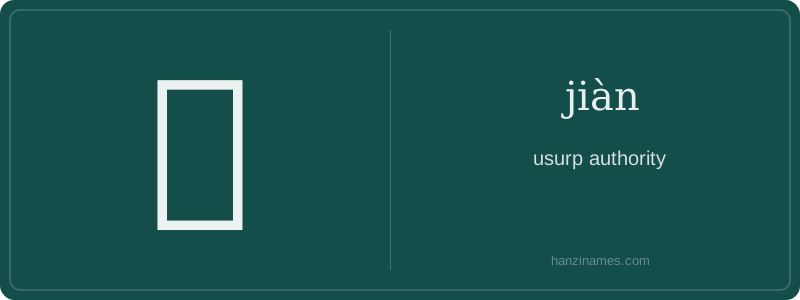
僭 is exceptionally rare in modern spoken Chinese but persists in formal historical, legal, and literary discourse. It appears in classical texts like the Zuo Zhuan (c. 4th century BCE) condemning feudal lords who ‘usurped rites’ (僭禮), and in Qing dynasty memorials accusing officials of ‘僭用 royal insignia’. Today, it surfaces almost exclusively in academic writing, historical documentaries, and formal critiques of protocol violations—e.g., describing unauthorized use of national emblems or ceremonial titles.
The character is not pictographic; it’s a phono-semantic compound. The left 亻 (person) indicates human action; the right component (originally derived from 戔 + 憎’s top) serves primarily as a phonetic hint for jiàn. No oracle bone or bronze script forms survive—its earliest attestation is in Warring States bamboo slips, where it consistently denotes illegitimate appropriation of status symbols.
As an archaeologist brushing dust from a Tang dynasty stele, I found 僭 carved beside a stern imperial edict condemning a regional governor who dared wear dragon motifs—reserved exclusively for the Son of Heaven. The character’s left side, 亻 (person), anchors it in human agency; the right, 憎 (zēng, to hate) minus its heart radical and fused with 戋 (jiān, 'to cut shallowly'), evolved into a phonetic-semantic compound signaling illicit, superficial imitation of sacred authority.
This character does not denote mere disobedience—it marks ritual transgression: wearing robes, using titles, or performing rites reserved for higher rank. Excavated Song legal codes list 僭 as grounds for demotion or exile. Its rarity today reflects Confucian orthodoxy’s enduring power: authority isn’t just political—it’s cosmological, and 僭 violates that order like a cracked bronze bell.
Unlike common verbs, 僭 carries archaic gravity. You won’t hear it in casual speech—but scholars cite it when analyzing dynastic decline, and historians use it to diagnose legitimacy crises. Its fourteen strokes form a visual warning: each stroke a boundary crossed. To write 僭 is to trace the fault line between proper role and dangerous ambition—a lesson etched deep in China’s bureaucratic soul.
Example Sentences
Common Compounds
Similar Characters — Don't Mix These Up
Your First Step into Chinese Culture: Get a Chinese Name
Every journey into Chinese begins with a name. Use our free Chinese name generator to create a meaningful, personalized Chinese name that fits you perfectly.
Get My Chinese Name →