儓
Character Story & Explanation
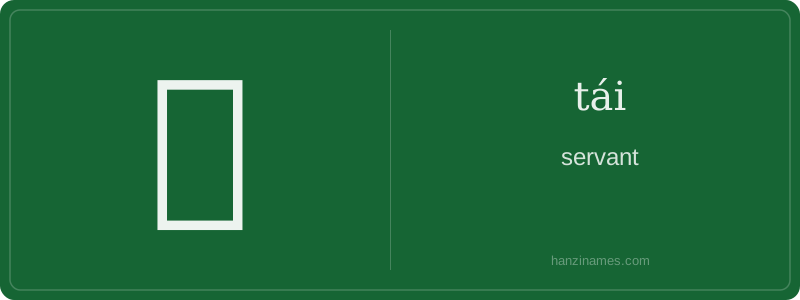
儓 is virtually unused in spoken Mandarin today and absent from all HSK levels. Historically, it appeared in late imperial texts like the *Qing Code* and literati essays to denote low-status domestic attendants—distinct from higher-ranked retainers (幕僚, mùliáo) or eunuchs (太监, tàijiān). No idioms or set phrases containing 儓 survive in modern usage; it appears only in isolated classical citations or historical glossaries.
The character is a left-right phono-semantic compound: 亻 (person radical) + 台 (tái, phonetic component). 台 itself evolved from an ancient pictograph of a raised platform—symbolizing authority—but here contributes only pronunciation. No oracle-bone or bronze inscription evidence exists for 儓; it first appears reliably in Song–Yuan lexicographic works, confirming its late, bureaucratic origin—not ancient ritual use.
The character 儓 (tái) is a rare, literary term meaning 'servant' or 'attendant', primarily preserved in classical Chinese texts and historical fiction. Unlike common modern words like 仆人 (púrén) or 服务员 (fúwùyuán), 儓 carries an archaic, almost ceremonial tone—evoking Ming-Qing dynasty mansions where low-ranking household staff wore plain hemp robes and addressed masters with deep bows. Its rarity means most native speakers today encounter it only in period dramas or annotated classics—not daily conversation.
Etymologically, 儓 combines the 'person' radical (亻) with 台 (tái), which originally meant 'platform' or 'terrace' but here serves phonetically. The character does not depict a servant literally; rather, it’s a phono-semantic compound standardized in the Kangxi Dictionary (1716). Its usage reflects Confucian social hierarchy: servants were expected to be silent, obedient, and invisible—qualities embedded in the word’s restrained, formal sound.
In contemporary China, 儓 appears almost exclusively in scholarly contexts: academic papers on premodern labor systems, editorial footnotes in reissued Qing novels like *The Scholars* (*Rulin Waishi*), or calligraphy exhibitions featuring classical poetry. Even language apps and HSK materials omit it entirely—it’s not in the HSK list, nor taught in standard curricula. This underscores how deeply language mirrors societal change: as feudal structures vanished, so did the lexical space for such specific, status-bound terms.
Example Sentences
Common Compounds
Similar Characters — Don't Mix These Up
Your First Step into Chinese Culture: Get a Chinese Name
Every journey into Chinese begins with a name. Use our free Chinese name generator to create a meaningful, personalized Chinese name that fits you perfectly.
Get My Chinese Name →