儤
Character Story & Explanation
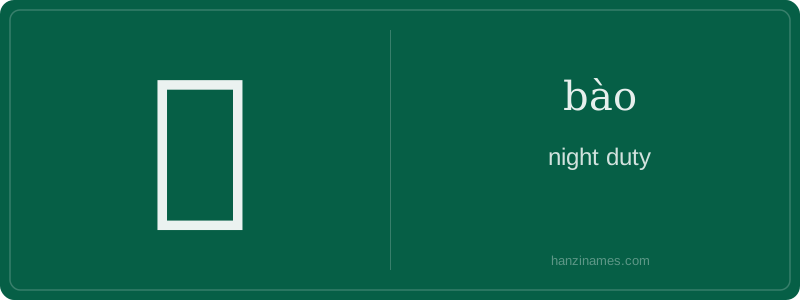
儤 appears primarily in pre-modern Chinese historical texts — especially Song, Yuan, and Ming dynasty records — to denote mandatory overnight service by civil officials or palace scribes. For example, the History of Song (《宋史》) mentions 儤直 (bào zhí) as a rotational night-duty system for Hanlin Academy scholars. It’s virtually absent from modern spoken Mandarin and not used in contemporary workplace terms like ‘overtime’ (加班, jiābān) or ‘shift’ (班次, bāncì).
The character is composed of the ‘person’ radical (亻) on the left and the phonetic component 雹 (báo, 'hail') on the right — a common phonosemantic structure. While 雹 suggests pronunciation, its semantic link to ‘night duty’ is lost to time; no pictographic origin exists. Today, you’ll only encounter 儤 in academic or literary contexts — never in apps, signs, or casual speech.
Hi students! Today we’re learning the character 儤 (bào), which means 'on night duty' — specifically, performing official duties during the night, especially in historical Chinese government contexts. It’s a relatively rare character today, mostly found in classical texts or formal historical discussions. Don’t worry — it’s not in daily conversation, but understanding it helps you read imperial-era documents, poetry, or scholarly works about ancient bureaucracy.
This character reflects how seriously traditional China took administrative discipline: officials were expected to serve day and night, and 儤 marked that solemn, quiet vigil. Its pronunciation ‘bào’ is straightforward — like the ‘bao’ in ‘baozi’, but with the fourth tone (falling). Though uncommon now, seeing it in context teaches you how Chinese characters encode roles, time, and duty in one compact form.
Beginners often confuse 儤 with more common duty-related characters like 值 (zhí, 'to be on duty') or 班 (bān, 'shift'). But 儤 is special: it’s exclusively nocturnal and historically bureaucratic. Think of it as ‘night shift for scholars and clerks in the Song or Ming dynasties’. You won’t need it for ordering food or asking directions — but if you’re reading The Dream of the Red Chamber or official Ming records, it may appear!
Example Sentences
Common Compounds
Similar Characters — Don't Mix These Up
Your First Step into Chinese Culture: Get a Chinese Name
Every journey into Chinese begins with a name. Use our free Chinese name generator to create a meaningful, personalized Chinese name that fits you perfectly.
Get My Chinese Name →