冽
Character Story & Explanation
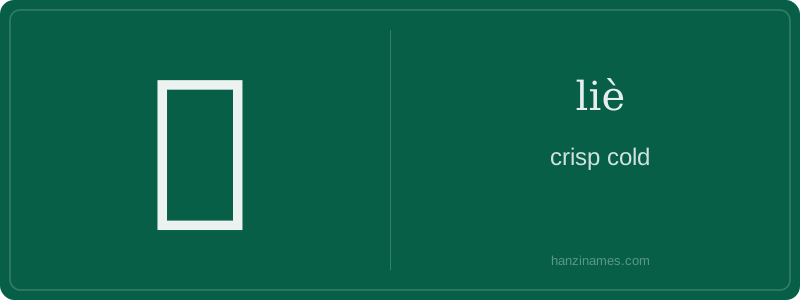
冽 appears in classical Chinese texts such as the Shījīng (Book of Songs) and Tang dynasty poetry to describe chilling winds, clear rivers, and distilled liquors. Today, it’s most commonly encountered in compound words like 清冽 (qīng liè, ‘crisp and pure’) describing spring water or premium baijiu, and in formal writing about climate or landscape. It’s absent from HSK lists (not assigned an official level) due to its literary rarity, but appears in standardized tests like the YCT Level 4+ reading passages on nature themes.
The character evolved from seal script where 冫 (two ice dots) clearly represented frozen moisture, while 列 (liè) served as a phonetic loan—no pictographic origin for the full character exists. In modern life, Chinese speakers use 冽 almost exclusively in written compounds—not standalone—and often when praising the clean, sharp taste of high-altitude spring water or aged grain alcohol.
冽 (liè) is a poetic and literary character conveying intense, biting cold—beyond mere low temperature. It evokes the raw, crisp sensation of winter air at dawn, icy mountain springs, or wind slicing through thin clothing. Unlike general terms for cold like 冷 (lěng), 冽 emphasizes purity, sharpness, and invigorating austerity. It’s rarely used in casual speech but appears frequently in classical poetry, wine descriptions, and refined natural imagery.
This character belongs to the 冫 (ice) radical family, sharing semantic ground with characters like 冷, 凉 (liáng, cool), and 冻 (dòng, freeze). Its eight-stroke structure reflects visual economy: two ice dots atop a simplified ‘lie’ phonetic component (列 liè), hinting at both sound and conceptual clarity—cold so distinct it ‘lines up’ perceptibly in the air.
In Western cultural equivalents, 冽 aligns less with scientific ‘low temperature’ and more with Romantic or transcendentalist notions: think Wordsworth’s ‘frosty silence’, Thoreau’s ‘crystalline air’ at Walden, or Norse myth’s Niflheim—the primordial realm of icy mist and raw creation. It carries connotations of moral purity and elemental authenticity, much like ‘austere’ or ‘bracing’ in English—but condensed into a single, elegant glyph.
Example Sentences
Common Compounds
Similar Characters — Don't Mix These Up
Your First Step into Chinese Culture: Get a Chinese Name
Every journey into Chinese begins with a name. Use our free Chinese name generator to create a meaningful, personalized Chinese name that fits you perfectly.
Get My Chinese Name →