凯
Character Story & Explanation
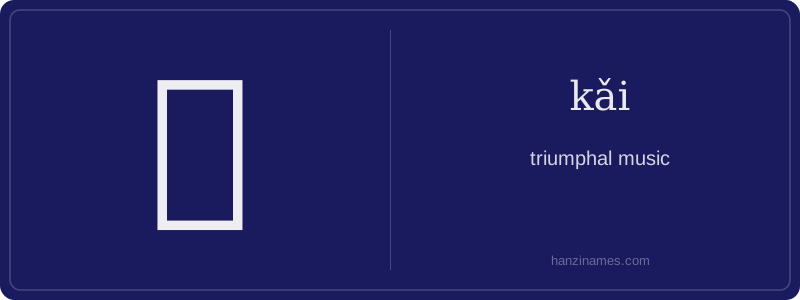
凯 is most famously used in the compound 凯旋 (kǎixuán), meaning 'triumphant return', rooted in classical texts like the *Zuo Zhuan* (c. 4th century BCE), where it described victorious generals returning to the capital accompanied by ceremonial music. Today, it appears widely in news headlines (e.g., ‘中国航天员凯旋归来’ — 'Chinese astronauts return triumphantly'), school slogans, and even metro station names (e.g., Beijing’s ‘凯旋路’). It’s also common in personal names, especially for boys, conveying auspiciousness and strength.
The character 凯 first appeared in seal script during the Warring States period. Its structure combines 岂 (qǐ, phonetic component, originally a rhetorical question particle) and 几 (jī, semantic component suggesting a base or platform — evoking the ceremonial stand for ritual music). No oracle-bone form survives; its earliest confirmed form is in bronze inscriptions from the late Zhou dynasty.
Hi students! Let’s explore the character 凯 (kǎi). It’s an elegant, eight-stroke character with the ‘几’ (jī) radical — the same component found in words like ‘chair’ (几) and ‘almost’ (几乎). Though it looks simple, 凯 carries a powerful, uplifting meaning: ‘triumphal music’ — the joyful, celebratory music played after victory. This reflects ancient Chinese military tradition where music marked success and harmony restored after battle.
Don’t confuse 凯 with common homophones like ‘开’ (kāi, ‘to open’) or ‘慨’ (kǎi, ‘to sigh’). Its pronunciation kǎi is third tone — remember to dip your voice down then rise slightly. The left side ‘岂’ (qǐ) originally meant ‘how could it be?’ but here serves phonetically, while the right side ‘几’ hints at structure and support — fitting for music that uplifts and unites.
Although not yet assigned an official HSK level (it appears most often in proper names and literary contexts), 凯 is culturally significant. You’ll encounter it in names like ‘凯旋’ (kǎixuán, ‘triumphant return’) and modern brand names (e.g., car models, sports teams). Learning it opens doors to understanding Chinese values around honor, celebration, and collective joy — not just noise, but music with purpose and dignity.
Example Sentences
Common Compounds
Similar Characters — Don't Mix These Up
Your First Step into Chinese Culture: Get a Chinese Name
Every journey into Chinese begins with a name. Use our free Chinese name generator to create a meaningful, personalized Chinese name that fits you perfectly.
Get My Chinese Name →