剳
Character Story & Explanation
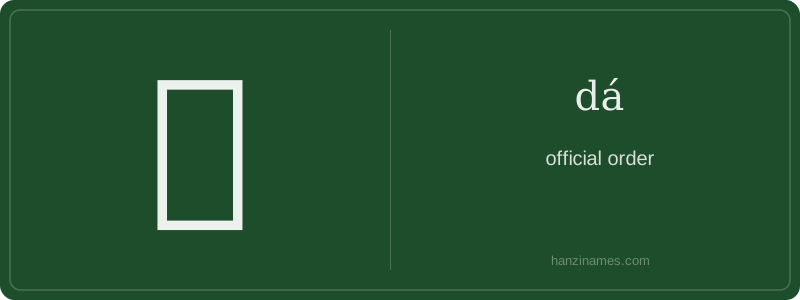
Historically, 剳 was used in imperial China and late Qing/early Republican bureaucracy for formal directives — especially ‘剳文’ (dáwén), meaning ‘official notice’ or ‘circular order’. These were administrative documents issued by governors or military commanders, often stamped with a seal. Though obsolete in daily use today, 剳 survives in historical archives, scholarly research, and classical literature studies.
The character is a semantic-phonetic compound: 札 (zhá) provides both sound and meaning (wooden tablet/document), while 刂 indicates authority/action. No oracle-bone or bronze script forms are attested; it emerged later in clerical script during the Han dynasty as bureaucratic writing formalized.
Hi students! Today we’re learning 剳 (dá), a relatively rare but historically rich character. Though it’s not in the HSK lists (so no official level), it appears in classical texts and historical documents. Its radical 刂 (the ‘knife’ or ‘cutting’ radical) tells us it relates to actions involving sharp tools — not literal cutting, but precise, authoritative acts like issuing orders or affixing seals.
This character is pronounced dá — like ‘da’ in ‘data’, with first tone (flat and high). It has 12 strokes, and its structure is left–right: the left side is 札 (zhá, meaning ‘wooden tablet’ or ‘official document’), and the right is 刂 (knife radical), symbolizing the act of inscribing, sealing, or authorizing that document.
Don’t confuse 剳 with more common characters like 扎 (zhā/zā) or 札 (zhá). While 札 refers to the physical document, 剳 specifically denotes the *act of issuing* or *the official order itself*. Think of it as the ‘seal-stamped decree’ — an authoritative hook that binds action to command.
Example Sentences
Common Compounds
Similar Characters — Don't Mix These Up
Your First Step into Chinese Culture: Get a Chinese Name
Every journey into Chinese begins with a name. Use our free Chinese name generator to create a meaningful, personalized Chinese name that fits you perfectly.
Get My Chinese Name →