劁
Character Story & Explanation
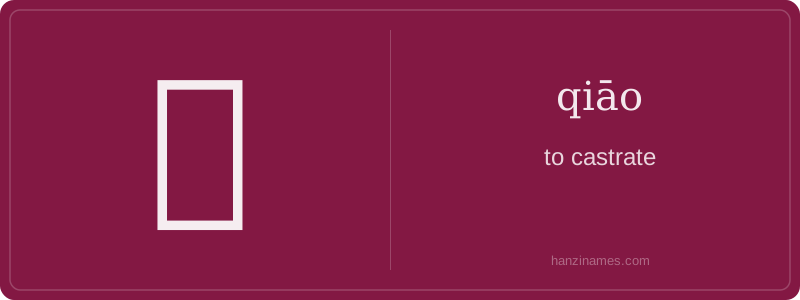
劁 is still actively used in veterinary extension services and rural agricultural training across China. Official documents from the Ministry of Agriculture and Rural Affairs (e.g., 2022 ‘Livestock Health Management Guidelines’) use 劁 specifically for surgical castration of male livestock to improve meat quality and behavior control. It appears in farmer handbooks and livestock insurance forms — never in casual speech or urban media.
The character combines 秋 (qiū, 'autumn') on the left and 刂 (knife radical) on the right. Historically, autumn was the preferred season for castration — cooler temperatures reduced infection risk and stress. This seasonal association is documented in Ming-dynasty agricultural treatises like Fangyu Shenglan (1573), confirming the semantic logic behind the character’s structure.
Hello students! Today we’ll learn 劁 (qiāo), a specialized character meaning 'to neuter livestock' — especially pigs, goats, or dogs. It’s not common in daily conversation but appears in agricultural, veterinary, and rural contexts. Notice its right-side radical 刂 (knife radical), which signals cutting or surgical action — a clear clue to its meaning. Though rare in cities, it’s still used across China’s farming communities where animal husbandry remains vital.
This character is pronounced qiāo — like 'qiao' in 'Qingdao', with a flat first tone. Its 14 strokes follow a logical structure: the left part (秋) suggests timing (autumn was traditionally when castration occurred for better meat quality), while the right (刂) confirms the physical act. Don’t confuse it with similar-sounding characters like 敲 (qiāo, 'to knock') — the radicals make all the difference!
As a beginner, you won’t need 劁 for HSK exams — it’s not in the official HSK vocabulary lists (HSK 1–6). But understanding it helps you read rural news, veterinary manuals, or historical texts about traditional farming. Think of it as a 'cultural literacy' character: not essential for ordering food or asking directions, but valuable for deeper insight into China’s agrarian roots and modern animal management practices.
Example Sentences
Common Compounds
Similar Characters — Don't Mix These Up
Your First Step into Chinese Culture: Get a Chinese Name
Every journey into Chinese begins with a name. Use our free Chinese name generator to create a meaningful, personalized Chinese name that fits you perfectly.
Get My Chinese Name →