匴
Character Story & Explanation
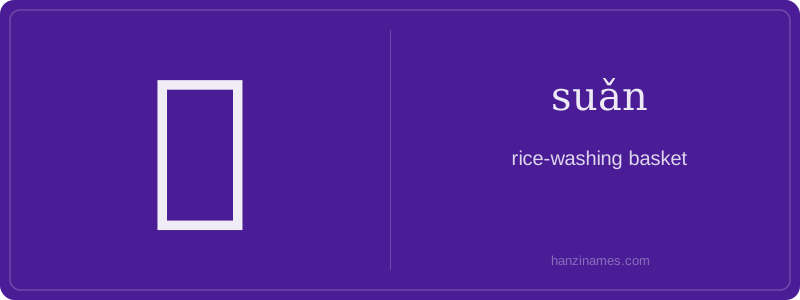
匴 appears almost exclusively in historical dictionaries (e.g., Shuōwén Jiězì, 100 CE) and classical agricultural or ritual texts. It is not used in modern spoken or written Mandarin — no idioms, phrases, or contemporary compounds contain it. Linguists classify it as a 'literary relic character' (文言字), preserved only for scholarly reference or textual reconstruction of ancient domestic life.
The character’s structure combines the bamboo radical (⺮) atop the phonetic component 算 (suàn, 'to calculate'), indicating both material (bamboo) and sound. This is a documented phono-semantic compound — common in Han dynasty lexicography — with no pictographic origin; it was never a drawing of the object, but a constructed logograph reflecting composition and pronunciation.
The character 匴 (suǎn) opens a quiet window into ancient Chinese material culture — not through grand philosophy or imperial decree, but through the humble, rhythmic act of rinsing rice. In agrarian society, where rice was life’s cornerstone, every utensil carried symbolic weight: bamboo, flexible yet resilient, embodied harmony between human need and natural resource. 匴 reflects this ethos — a vessel shaped by function, crafted from sustainable material, and designed for purification before nourishment.
This character embodies the Confucian ideal of *li* (ritual propriety) in daily practice: even washing grain followed intentional form. The care taken in preparing food mirrored moral cultivation — small acts refined character. 匴 thus represents more than utility; it is a silent teacher of reverence for sustenance, continuity of craft, and the dignity embedded in routine labor.
Though obsolete as an object, 匴 endures in classical texts and lexicography as a marker of cultural memory. Its survival underscores how Chinese writing preserves vanished technologies and social rhythms — not as relics, but as semantic anchors. To encounter 匴 is to touch a vanished kitchen, hear the swish of water through bamboo slats, and recognize that civilization is built not only on monuments, but on the quiet precision of everyday tools.
Example Sentences
Common Compounds
Similar Characters — Don't Mix These Up
Your First Step into Chinese Culture: Get a Chinese Name
Every journey into Chinese begins with a name. Use our free Chinese name generator to create a meaningful, personalized Chinese name that fits you perfectly.
Get My Chinese Name →