呐
Character Story & Explanation
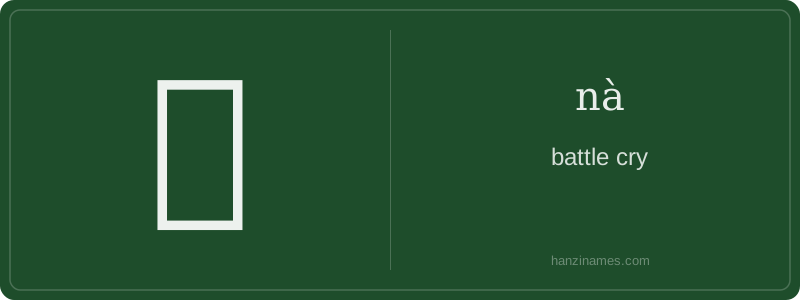
呐 is most famously used in Lu Xun’s 1923 short story collection Call to Arms (《呐喊》, Nàhǎn), where it symbolizes urgent social awakening — literally ‘shouting out’ against injustice. In modern usage, it appears in emotive writing, subtitles for animated characters, and online forums to simulate vocal excitement (e.g., ‘呐!快看!’ — ‘Hey! Look quickly!’). It’s never used in formal speech or official documents, but remains vital in expressive, literary Chinese.
The character combines 口 (mouth, indicating sound) and 冉 (rǎn, originally depicting hair growing downward — here used phonetically). No oracle-bone or bronze script forms survive for 呐; it first appeared in late imperial texts as a phonetic loan for expressing vocal exclamations. Today, Chinese learners encounter it primarily through Lu Xun’s iconic title and contemporary creative writing.
Hi students! Let’s learn 呐 (nà), a lively character with just 7 strokes and the ‘mouth’ radical 口 — telling us it’s about sound or speech. Though often typed as 'na' in casual pinyin (like in exclamations), its formal pronunciation is nà. It’s not a standalone word but appears in expressive interjections, especially in literary or dramatic contexts to mimic a sharp, spirited cry — think of soldiers shouting before charging or performers adding vocal energy to dialogue.
This character isn’t used in daily conversation like ‘hello’ or ‘thank you’. Instead, it’s stylistic — common in novels, subtitles, comics, and stage directions to convey vocal intensity. You’ll rarely hear it spoken alone; it’s almost always part of a phrase like ‘呐喊’ (nà hǎn) or used for rhythmic emphasis, similar to how English writers use ‘ho!’ or ‘ah!’ in poetry or speeches.
Don’t confuse 呐 with more common particles like 啊 (a) or 呀 (ya). While those soften tone or show emotion, 呐 adds urgency, vigor, or collective energy. Its visual simplicity (口 + 冉) hides its functional richness: it’s a sonic brushstroke — small in form, big in expressive impact. Mastering it helps you read authentic Chinese literature and appreciate how sound is written into meaning.
Example Sentences
Common Compounds
Similar Characters — Don't Mix These Up
Your First Step into Chinese Culture: Get a Chinese Name
Every journey into Chinese begins with a name. Use our free Chinese name generator to create a meaningful, personalized Chinese name that fits you perfectly.
Get My Chinese Name →