呏
Character Story & Explanation
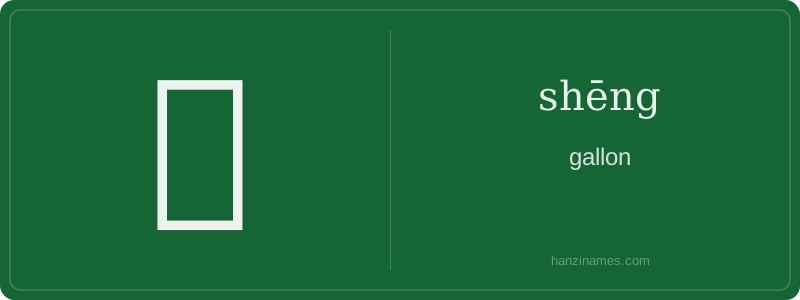
呏 is documented in the Xiàndài Hànyǔ Cídiǎn (7th ed., 2016) as a transliteration character for 'gallon', used primarily in Taiwan and occasionally in mainland China for imported goods. It appears on fuel dispensers in some Taiwanese gas stations (e.g., '美制呏' for U.S. gallons) and on industrial equipment specs. No idioms or set phrases contain it — its usage is strictly technical and lexical.
The character 呏 has no ancient origin: it is a modern invention composed of 口 (mouth/radical for sound-based characters) and 生 (shēng, used here solely for phonetic value). This follows the common 'phonosemantic compound' pattern — but since 'gallon' has no native meaning in Chinese, 口 signals 'transcribed term', and 生 provides pronunciation only. It is not found in oracle bone, bronze, or seal scripts.
Dear students, the character 呏 (shēng) is a modern Chinese character used exclusively as a phonetic loan for the English unit 'gallon'. It is not an ancient or traditional character — it was created in the 20th century to transcribe foreign measurements. You’ll rarely encounter it in classical texts or everyday conversation, but you may see it on imported product labels, fuel pumps, or technical documents involving U.S. customary units.
This character belongs to the category of 'transliteration characters' — meaning it’s chosen for sound, not meaning. Its pronunciation 'shēng' approximates the first syllable of 'gallon' (as pronounced in some regional English accents or early Sino-English contact contexts). Unlike most Chinese characters, 呏 has no native semantic component or historical pictographic origin — it’s purely functional and modern.
Because it’s so specialized and infrequent, 呏 does not appear in any HSK level — it’s outside the standardized curriculum. You won’t be tested on it, nor will you need to write it from memory in daily life. But recognizing it helps when reading bilingual packaging (e.g., motor oil containers labeled '5 呏') or older technical manuals. Think of it as a 'loanword glyph', like how English uses 'kilo' instead of writing out 'kilogram'.
Example Sentences
Common Compounds
Similar Characters — Don't Mix These Up
Your First Step into Chinese Culture: Get a Chinese Name
Every journey into Chinese begins with a name. Use our free Chinese name generator to create a meaningful, personalized Chinese name that fits you perfectly.
Get My Chinese Name →