咢
Character Story & Explanation
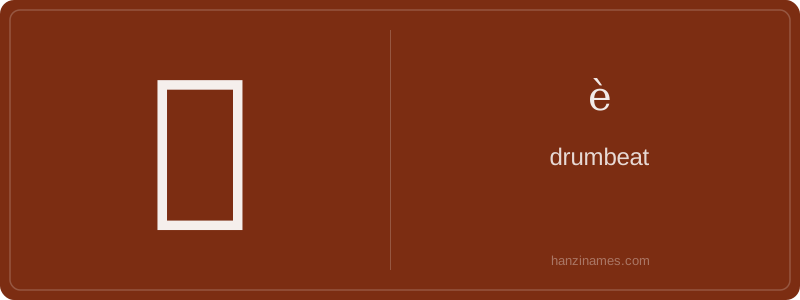
咢 is rarely used independently in modern Mandarin. Its main living usage is in the literary expression 咢然 (è rán), meaning 'suddenly startled' or 'dumbfounded', appearing in classical texts and formal writing — for example, in Lu Xun’s essays or modern news headlines describing shock reactions. It also appears in historical bronze inscriptions referring to ceremonial drumming during Zhou dynasty rituals, documented in archaeological reports like those from the Shanghai Museum’s Western Zhou bronzes collection.
The character’s structure is not a pictograph of a drum, but a phono-semantic compound: 口 signals sound-related meaning, and the top component (a variant of 我 wǒ, but here serving phonetically) hints at pronunciation. No oracle bone form survives; the earliest attested form appears on Warring States bamboo slips, consistently used in contexts of sudden auditory impact or alarm.
Hi students! Today we’re learning the character 咢 (è), a 9-stroke character with the mouth radical 口. Though it looks like it might relate to speech or sound, its original meaning is 'to beat a drum' — a vivid action from ancient ritual music and warfare. The top part (咢) resembles a drum frame with drumsticks, while the 口 at the bottom may suggest rhythmic vocalization accompanying drumming. This character is rare in modern daily use, so don’t worry if you haven’t seen it before!
Don’t confuse 咢 with the much more common è (è) meaning 'to scold' or 'harsh' — that’s written as (the same pronunciation but different character). 咢 is primarily found in classical texts, poetry, and compound words like 咢然 (è rán), meaning 'startled' or 'astonished', where it conveys a sudden, sharp reaction — like the abrupt sound of a drumbeat catching attention.
As a beginner, focus on recognizing 咢 visually: it’s built around 口, with three horizontal strokes above and two diagonal strokes forming a 'mouth-like' shape inside. Practice writing it stroke-by-stroke: start with the outer 口 (3 strokes), then add the inner elements top-to-bottom. Though not in the HSK list (HSK Level: Not included), understanding characters like 咢 helps deepen your appreciation of how Chinese connects sound, action, and imagery — especially in literary and historical contexts.
Example Sentences
Common Compounds
Similar Characters — Don't Mix These Up
Your First Step into Chinese Culture: Get a Chinese Name
Every journey into Chinese begins with a name. Use our free Chinese name generator to create a meaningful, personalized Chinese name that fits you perfectly.
Get My Chinese Name →