喣
Character Story & Explanation
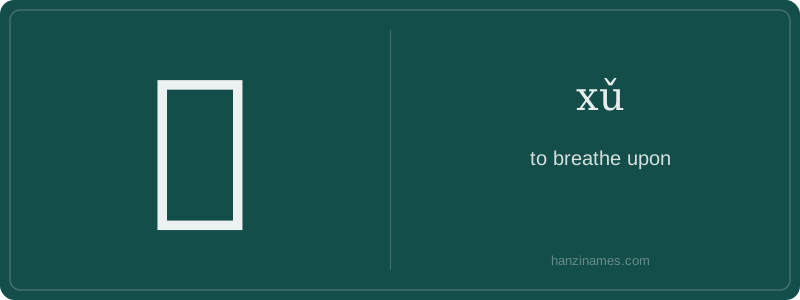
喣 appears almost exclusively in classical and literary contexts—not in modern media, signage, or daily speech. It features in the rare compound 喣濡 (xǔ rú), meaning 'to moisten with breath', used metaphorically in texts like the Zhuangzi and later commentaries to describe gentle, sustaining influence—akin to dew nourishing grass. The Shuōwén Jiězì (121 CE), China’s first dictionary, defines 喣 as 'warm breath' (溫氣), confirming its early association with life-sustaining respiration.
The character is a phono-semantic compound: left side 口 (mouth, radical for oral actions), right side 虚 (xū, 'empty/hollow', providing sound and hinting at breath’s intangible quality). No oracle-bone or bronze inscriptions contain 喣; it emerged later in seal script, reflecting refined lexical needs of Warring States–Han philosophical writing.
喣 (xǔ) is a rare, literary character meaning 'to breathe upon'—evoking gentle, life-giving breath, like warm air on cold glass or a parent’s soft exhalation over a child’s scraped knee. It carries connotations of nurturing, tenderness, and subtle influence, far removed from forceful action. Though nearly absent in modern spoken Mandarin, it survives in classical texts and poetic compounds, where its phonetic-semantic structure reflects ancient attention to breath as vital energy.
This character belongs to the ‘mouth’ (口) radical family, signaling speech, sound, or respiration. Its right component, 虚 (xū), means 'empty' or 'hollow', suggesting the intangible, airy nature of breath itself—neither solid nor visible, yet essential. In traditional Chinese thought, breath (qì) bridges body and spirit, making 喣 a quietly profound lexical artifact of that worldview.
While you won’t hear 喣 in daily conversation—even native speakers may hesitate to pronounce it—the character endures in fixed literary phrases and historical medical or Daoist writings. Its rarity makes it a marker of textual sophistication: spotting it in a Tang poem or Song essay signals deliberate stylistic refinement. Learning 喣 opens a window not just to vocabulary, but to how pre-modern Chinese conceptualized care, warmth, and imperceptible yet vital forces.
Example Sentences
Common Compounds
Similar Characters — Don't Mix These Up
Your First Step into Chinese Culture: Get a Chinese Name
Every journey into Chinese begins with a name. Use our free Chinese name generator to create a meaningful, personalized Chinese name that fits you perfectly.
Get My Chinese Name →