嗉
Character Story & Explanation
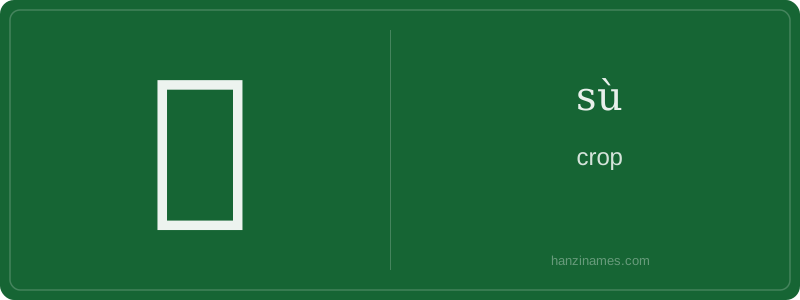
嗉 is used almost exclusively in zoological, veterinary, and agricultural texts — for example, in poultry farming manuals published by China’s Ministry of Agriculture, where terms like '嗉囊炎' (crop inflammation) appear in disease diagnosis guidelines. It also appears in classical poetry and historical texts describing feeding behavior of birds, such as in Ming-dynasty agricultural treatises on silkworm rearing (where sparrows were controlled near mulberry trees).
The character is a semantic-phonetic compound: 口 (mouth/throat-related meaning) + 素 (sù, indicating pronunciation). It is not pictographic — no oracle-bone or bronze script forms survive for 嗉. Its earliest confirmed appearance is in Song-era medical encyclopedias like the 'Taiping Shenghui Fang', where it denotes the avian crop in comparative anatomy discussions.
Hi students! Today we’re learning 嗉 (sù), a character that describes a very specific part of a bird’s anatomy — the crop. The crop is a pouch-like part of the esophagus where birds temporarily store and soften food before digestion. Though not commonly used in daily conversation, 嗉 appears in scientific, veterinary, and agricultural contexts in Chinese — especially when discussing poultry health or avian biology.
This character belongs to the 口 (kǒu, 'mouth') radical family, which makes sense because the crop is part of the digestive tract connected to the mouth and throat. Its 13 strokes include several horizontal and vertical lines with a clear right-side component (素, sù) that hints at pronunciation — a common phonetic-semantic compound structure in Chinese characters.
Don’t worry if you haven’t heard this word before — it’s not in the HSK curriculum (HSK Level: Not included), and native speakers rarely use it outside technical or literary settings. But understanding characters like 嗉 helps you recognize patterns: how radicals suggest meaning, how phonetics guide pronunciation, and how Chinese precisely names even specialized biological structures — reflecting the language’s descriptive richness and scientific tradition.
Example Sentences
Common Compounds
Similar Characters — Don't Mix These Up
Your First Step into Chinese Culture: Get a Chinese Name
Every journey into Chinese begins with a name. Use our free Chinese name generator to create a meaningful, personalized Chinese name that fits you perfectly.
Get My Chinese Name →