噇
Character Story & Explanation
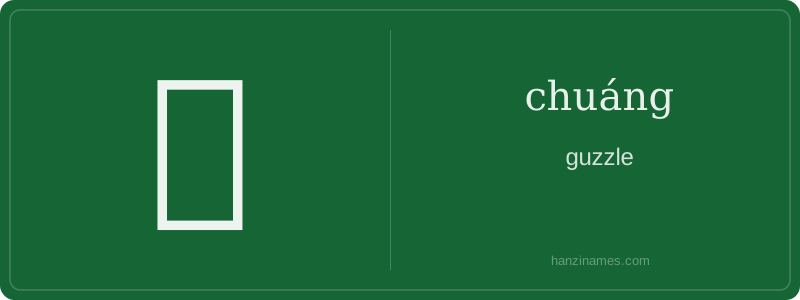
噇 is rarely used in daily conversation today, but it survives in literary and regional contexts — especially in northern Chinese dialects and classical-influenced writing. It appears in Ming-Qing vernacular novels (e.g., *Jin Ping Mei*) to depict unrestrained indulgence, and in modern satirical essays criticizing consumerism or food waste. The phrase '噇酒噇肉' (chuáng jiǔ chuáng ròu) — 'guzzle wine, wolf down meat' — is a documented collocation in dictionaries like the *Xiandai Hanyu Cidian*.
The character is not pictographic; it’s a phono-semantic compound: 口 (mouth, semantic) + 床 (chuáng, phonetic). There’s no oracle-bone or bronze inscription evidence — it first appeared reliably in Song-era texts. In practice today, you’ll most likely encounter it in historical dramas, literary analysis, or humorous online posts mocking over-the-top eating behavior.
Hi students! Today we’re learning 噇 (chuáng), a vivid, expressive character meaning 'to eat or drink extravagantly' — not just casually, but with gusto, excess, or even gluttony. It’s not a polite dining term; think of someone feasting noisily at a banquet or guzzling wine like there’s no tomorrow. Though rare in modern formal writing, it appears often in literature, satire, and regional speech to add color and judgment.
This character belongs to the ‘mouth’ radical (口), which makes sense — all eating/drinking verbs in Chinese tend to carry that radical. Its right side is 床 (chuáng, 'bed'), used here purely for sound (phonetic component), not meaning. Don’t confuse it with 床 itself! Pronunciation is straightforward: chuáng, second tone — same as 'bed', but with a very different idea.
Because 噇 carries strong connotations of excess and lack of restraint, it’s often used humorously or critically — especially in storytelling or dialects like Northern Mandarin and Shandong speech. You won’t find it on HSK lists (it’s beyond HSK 6), nor in textbooks, but recognizing it helps you appreciate classical idioms and sharp social commentary in novels or opera lyrics.
Example Sentences
Common Compounds
Similar Characters — Don't Mix These Up
Your First Step into Chinese Culture: Get a Chinese Name
Every journey into Chinese begins with a name. Use our free Chinese name generator to create a meaningful, personalized Chinese name that fits you perfectly.
Get My Chinese Name →