成
Character Story & Explanation
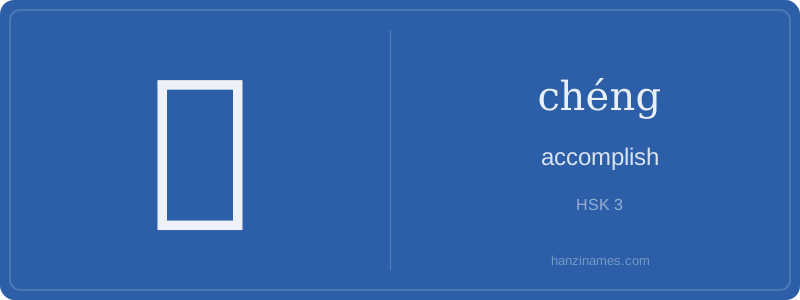
成 is ubiquitous in modern Mandarin: it appears in verbs like 成为 (chéngwéi, 'to become'), 成功 (chénggōng, 'to succeed'), and 成立 (chénglì, 'to be established'). It features in idioms such as 水到渠成 (shuǐ dào qú chéng, 'when water flows, the channel forms naturally'—i.e., success follows proper preparation). Historically, it appears in bronze inscriptions from the Western Zhou dynasty (c. 1046–771 BCE) meaning 'to complete a rite' or 'to accomplish a mandate.'
The character’s earliest attested form (in bronze script) shows 戈 (dagger-axe) beside 丁 (dīng, a phonetic component and symbol for 'nail' or 'firmness'), not a pictograph of Chengdu. Its link to Chengdu is purely phonetic and administrative: 成都 (Chéngdū) literally means 'Becoming Capital', referencing its founding as the capital of the Shu Kingdom during the Warring States period—where 'Chéng' signaled establishment and permanence, not the city’s name per se.
The character 成 (chéng) embodies a core Confucian and Daoist ideal: the harmonious culmination of effort, time, and alignment with natural or moral order. Unlike Western notions of 'success' tied to individual triumph, 成 suggests completion that arises from proper process—like a seed becoming a tree, or a ritual performed correctly yielding harmony. It reflects the Chinese worldview where value lies not just in outcome, but in the integrity of the path taken.
In classical texts like the *Analects* and *Zuo Zhuan*, 成 appears in contexts of fulfilled duties, accomplished rites, and realized virtue—not mere achievement, but ethical fruition. Its radical 戈 (ge, 'dagger-axe') hints at historical roots in military or ceremonial authority: success was once measured by disciplined action under shared principles, not personal gain. This anchors 成 in collective responsibility and cultivated readiness.
Even today, 成 carries quiet gravitas: 成了 (chéng le) — 'it’s done' — conveys relief, acceptance, or inevitability, not just completion. It evokes the Taoist idea of *zìrán* (spontaneous self-so), where things mature when conditions align. Thus, 成 is less a verb meaning 'to succeed' and more a philosophical marker of resonance—between human action and cosmic rhythm, intention and reality, effort and grace.
Example Sentences
Common Compounds
Similar Characters — Don't Mix These Up
Your First Step into Chinese Culture: Get a Chinese Name
Every journey into Chinese begins with a name. Use our free Chinese name generator to create a meaningful, personalized Chinese name that fits you perfectly.
Get My Chinese Name →