加
Character Story & Explanation
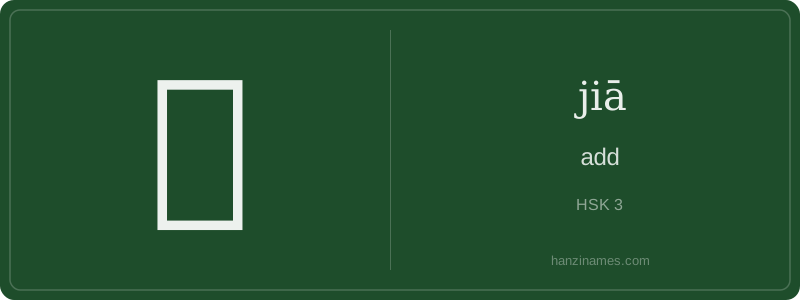
加 is ubiquitous in modern Mandarin: used in arithmetic (2 + 2 = 4 → 二加二等于四), food orders (加辣 ‘add spice’), and official terms like 加薪 (jiāxīn, ‘salary raise’). It appears in classical texts too — the earliest confirmed usage is in the Warring States bamboo slips (c. 4th century BCE), where it meant ‘to increase’ or ‘to augment’. A well-known idiom is 雪上加霜 (xuě shàng jiā shuāng, ‘frost added to snow’), meaning ‘to make a bad situation worse’.
The character evolved from seal script into its current form by the Han dynasty. It is not a pictograph — no ancient oracle bone or bronze inscription shows a clear visual representation like ‘sun’ or ‘tree’. Instead, it’s a standardized phono-semantic compound. Today, Chinese people most commonly use 加 in digital contexts: ‘add friend’ (加好友), ‘add to cart’ (加入购物车), or ‘add subtitle’ (添加字幕).
Hello students! Today we’re learning the character 加 (jiā), which is pronounced with a first tone and has only five strokes. Though it looks simple, it’s extremely common — you’ll see it everywhere: in math class (‘plus’), on menus (‘add extra’), and even in names like ‘Canada’. Its radical 力 (lì) means ‘strength’ or ‘power’, hinting at the idea of adding force or effort to something. Don’t confuse it with other characters that look similar — we’ll practice writing it step by step!
加 is an HSK Level 3 character, meaning it’s essential for intermediate learners. You’ll use it daily — whether ordering coffee (‘add milk’), calculating prices, or describing growth (e.g., ‘population increase’). It’s not a pictograph but a phono-semantic compound: the left part 口 (kǒu, ‘mouth’) originally suggested pronunciation (archaic *kâ), while 力 conveys semantic weight — reinforcing action or addition.
Remember: 加 never means ‘Canada’ by itself — that’s a common beginner misconception! The country name Canada is written as 加拿大 (Jiānádà), where 加 is just the first syllable of a phonetic transliteration. Chinese uses sound-alike characters for foreign names, so 加 here is purely phonetic — like using ‘ka’ in ‘karaoke’. Focus on its core meaning: ‘to add’, ‘plus’, or ‘increase’. Master this, and you’ll unlock dozens of useful words!
Example Sentences
Common Compounds
Similar Characters — Don't Mix These Up
Your First Step into Chinese Culture: Get a Chinese Name
Every journey into Chinese begins with a name. Use our free Chinese name generator to create a meaningful, personalized Chinese name that fits you perfectly.
Get My Chinese Name →