戏
Character Story & Explanation
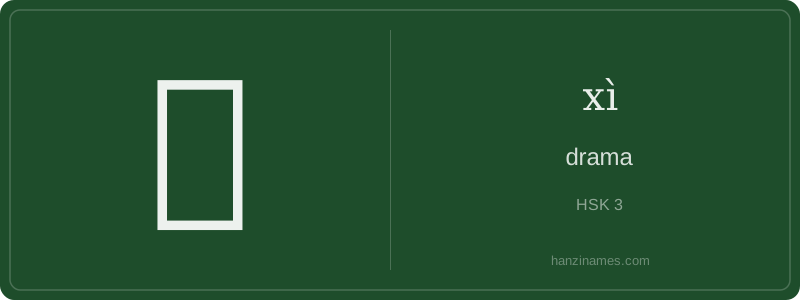
Historically, 戏 appears in early texts like the Book of Rites (Lǐjì, c. 3rd century BCE) referring to ritual performances and jesting behavior. By the Tang and Song dynasties, it solidified as the standard term for theatrical arts — especially in official records about imperial entertainment bureaus. Today, it’s ubiquitous: you’ll see it on theater posters (戏曲, xìqǔ), in idioms like 逢场作戏 (féng chǎng zuò xì, 'to play along superficially'), and even in internet slang like 戏精 (xìjīng, 'drama queen').
The character evolved from seal script where the left side clearly resembled 戈, and the right was a simplified form of 㚔 (a variant of 也). There's no verified pictographic origin (e.g., no oracle bone depiction of a stage); instead, think of real-life usage: when a Chinese friend says ‘今晚看戏!’ (jīn wǎn kàn xì!), they’re excitedly announcing plans to watch a live Peking opera or modern play — not pulling a prank.
Hello students! The character 戏 (xì) is a Level 3 HSK word — very useful and frequently seen in modern Chinese. Though its basic dictionary meaning is 'trick' or 'play', it’s most commonly used today to mean 'drama', 'theater', or 'performance'. Don’t be confused: this semantic shift happened centuries ago — in classical Chinese, 戏 did imply playful deception or jest, but over time, theatrical performance (which involves role-playing, illusion, and artful 'tricking' of the senses) became its dominant sense.
Notice its radical 戈 (gē), meaning 'dagger-axe' — an ancient weapon. This might seem odd for 'drama', but historically, early Chinese ritual performances (like those in Zhou dynasty court ceremonies or military-themed entertainments) often included martial displays, dance with weapons, and symbolic combat. So the 'weapon' radical reflects performance’s roots in ritualized, dynamic action — not literal fighting.
The six-stroke structure is simple but elegant: first the 戈 radical (strokes 1–4: horizontal, slash, dot, hook), then the right-side component 也 (yě), which here acts phonetically (though its pronunciation has shifted from ancient times). Practice writing it slowly: remember the order — top to bottom, left to right — and keep the hook of 戈 clean and decisive. It’s a great character to build confidence with!
Example Sentences
Common Compounds
Similar Characters — Don't Mix These Up
Your First Step into Chinese Culture: Get a Chinese Name
Every journey into Chinese begins with a name. Use our free Chinese name generator to create a meaningful, personalized Chinese name that fits you perfectly.
Get My Chinese Name →