根
Character Story & Explanation
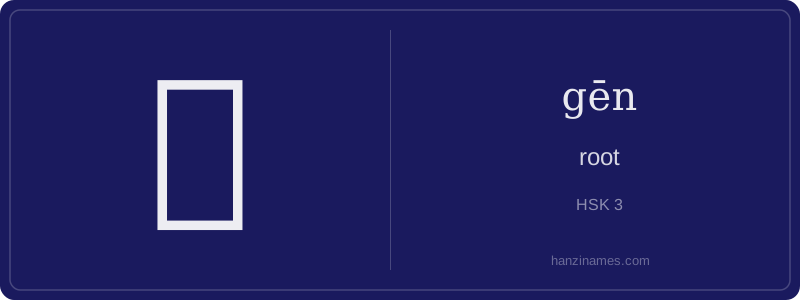
In daily life, 根 appears in common expressions like ‘一根筷子’ (yī gēn kuàizi, 'one chopstick')—where it serves as a standard measure word for long, thin objects—and in idioms such as ‘根深蒂固’ (gēn shēn dì gù, 'deep-rooted'), widely used in media and education to describe entrenched habits or beliefs. Historically, the term ‘寻根’ (xún gēn, 'seeking one’s roots') gained national prominence after the 1980s, fueling overseas Chinese genealogical research and hometown visits.
The character combines the 木 (mù, ‘tree’) radical with 艮 (gèn), a phonetic component indicating pronunciation. It first appeared in seal script (c. 3rd century BCE) as a clear pictophonetic character—visually representing roots extending beneath a tree. No oracle-bone form survives, but early bronze inscriptions already used it in agricultural records referring to crop roots.
In a quiet courtyard in Suzhou, an elderly gardener kneels beside a centuries-old ginkgo tree, gently brushing soil from its exposed roots. He explains to visiting students that 根 (gēn) isn’t just the buried part of a plant—it’s the unseen foundation that sustains life, much like family lineage or cultural memory. This tangible image helps learners grasp how deeply ‘root’ is embedded in Chinese thought—not as abstraction, but as living, breathing origin.
The character 根 appears constantly in modern Chinese: from subway station names like ‘Xizhimen’ (West Straight Gate) — where ‘men’ means gate, but locals jokingly call it ‘the root of Beijing’s metro system’—to phrases like ‘文化根源’ (wénhuà gēnyuán), meaning ‘cultural roots’. Its presence bridges botany, identity, and infrastructure in everyday speech.
Even tech-savvy youth use 根 metaphorically: ‘根服务器’ (gēn fúwùqì) refers to Internet root servers—the foundational DNS infrastructure that makes websites accessible worldwide. In China’s digital literacy campaigns, teachers emphasize that without these ‘roots’, the entire network collapses—mirroring ancient agricultural wisdom: cut the root, and the tree falls. This layered relevance makes 根 indispensable for HSK Level 3 learners.
Example Sentences
Common Compounds
Similar Characters — Don't Mix These Up
Your First Step into Chinese Culture: Get a Chinese Name
Every journey into Chinese begins with a name. Use our free Chinese name generator to create a meaningful, personalized Chinese name that fits you perfectly.
Get My Chinese Name →