糕
Character Story & Explanation
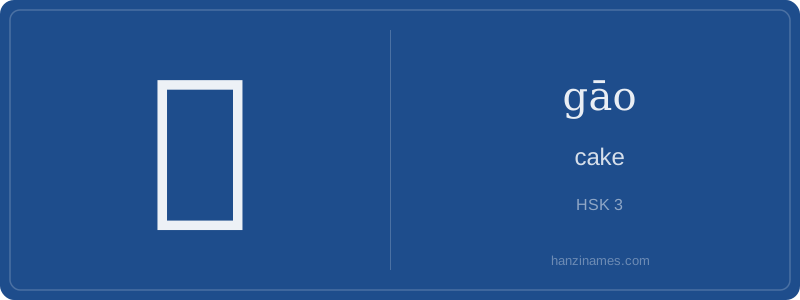
In China, 糕 is central to culinary tradition and festive life—most notably in niángāo (年糕), a chewy, sweet rice cake eaten during Lunar New Year for its pun on 'year high' (nián gāo), symbolizing rising fortune. Vendors across cities like Shanghai and Guangzhou sell varieties daily: zào gāo (steamed brown sugar cake), mǎ lái gāo (Malay-style sponge cake), and yuè bǐng (mooncakes, though technically 月饼, often colloquially grouped under 'gāo' in broader contexts). The term appears in documented Song dynasty texts describing banquet desserts, and remains in modern phrases like ‘步步高升’ (bù bù gāo shēng), where 高升 (gāo shēng) echoes 糕’s sound and meaning.
The character’s written form is a phono-semantic compound: 米 (rice radical, semantic) + 羔 (young sheep, phonetic, pronounced gāo). While 羔 itself originally depicted a lamb (oracle bone script shows horned animal), its adoption here is purely phonetic—not zoological. No ancient link to sheep exists for 糕; instead, this reflects standard Han dynasty character formation logic, prioritizing sound over literal imagery.
The character 糕 (gāo) represents a broad category of traditional Chinese steamed, baked, or pounded rice-based confections—distinct from Western 'cake' in texture and preparation. Its radical 米 (mǐ, 'rice') immediately signals its grain-based origin, reflecting how rice flour, glutinous rice, or sticky rice are foundational to these treats. Historically, such foods were offerings during festivals, symbolizing prosperity due to the homophone with 高 (gāo, 'high'), embodying upward fortune and promotion.
With 16 strokes, 糕 combines 米 on the left and 羔 (gāo, 'young sheep') on the right—a phonetic component that also subtly evokes auspiciousness, as lambs appear in classical symbolism of gentleness and renewal. Though not edible itself, the right side reinforces pronunciation while anchoring cultural resonance. This duality—semantic clarity plus phonetic reliability—is typical of phono-semantic compound characters in modern Chinese.
As an HSK Level 3 character, 糕 appears in everyday contexts: bakery signs, festival menus, and idiomatic expressions like 年糕 (niángāo, 'New Year cake'). Learners benefit from associating it with seasonal rituals—especially Lunar New Year—where eating niángāo expresses hopes for 'a higher year' (年高, nián gāo). Its consistent pronunciation and visual logic make it a memorable anchor for understanding how food-related characters encode both material and symbolic meaning.
Example Sentences
Common Compounds
Similar Characters — Don't Mix These Up
Your First Step into Chinese Culture: Get a Chinese Name
Every journey into Chinese begins with a name. Use our free Chinese name generator to create a meaningful, personalized Chinese name that fits you perfectly.
Get My Chinese Name →