估
Character Story & Explanation
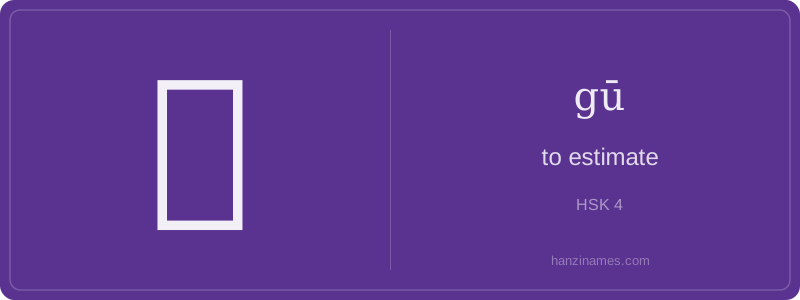
In modern Chinese, 估 appears constantly in finance, education, and daily speech: real estate agents 估房价 (estimate housing prices), teachers 估分 (estimate exam scores), and engineers 估工期 (estimate construction timelines). It’s central to the idiom 估息 (gū xī)—a historical term from Ming-Qing commercial records meaning ‘estimated interest’, reflecting merchant-led risk assessment long before Western banking models arrived.
The character’s form has no verified pictographic origin. It’s a standardized phonosemantic compound: 亻 (person, semantic) + 古 (gǔ, phonetic, though pronunciation shifted to gū). Today, Chinese students routinely use it in HSK-4 listening tasks—e.g., hearing ‘他们正在估测地震影响’ (They’re estimating the earthquake’s impact) and selecting the correct context.
As an archaeologist brushing dust from a Han dynasty bamboo slip, I find 估 inscribed in clerical script—its left side 亻 (person) anchoring it in human agency, its right side 古 (ancient) not as relic but as a phonetic scaffold. This is no oracle-bone pictograph of weighing scales; it’s a Warring States-era phonosemantic compound, where meaning emerges from social practice: estimation as a deliberate, person-mediated act—not divine revelation, but pragmatic judgment.
The radical 亻 reveals its anthropocentric core: estimation requires a thinking subject—someone who observes, compares, and infers. Unlike passive verbs like 'to be', 估 implies volition and responsibility. In excavated Qin legal texts, officials were held accountable for inaccurate 估 of grain yields or corvée labor—proof that this character carried juridical weight long before the HSK system existed.
Its seven strokes form a compact yet balanced structure: two for the person radical, five for 古—each stroke calibrated like a surveyor’s line. The final horizontal stroke of 古 extends slightly rightward, subtly suggesting projection into the unknown—a visual metaphor for forecasting. No mystical glyph here—just disciplined calligraphy encoding centuries of bureaucratic precision, economic planning, and empirical reasoning.
Example Sentences
Common Compounds
Similar Characters — Don't Mix These Up
Your First Step into Chinese Culture: Get a Chinese Name
Every journey into Chinese begins with a name. Use our free Chinese name generator to create a meaningful, personalized Chinese name that fits you perfectly.
Get My Chinese Name →