察
Character Story & Explanation
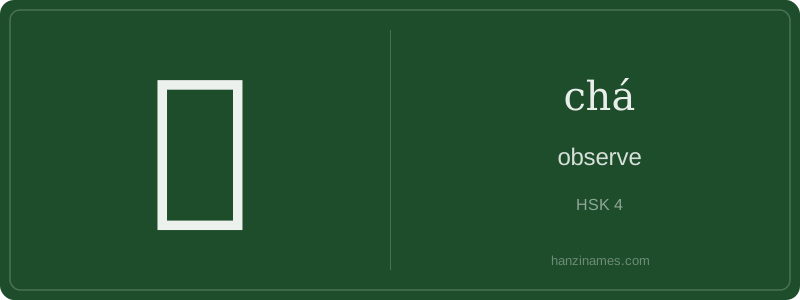
Historically, 察 was never primarily a geographical shorthand—it entered modern usage as the initial character in 察哈爾 (Cháhā'ěr), the official romanized name for Chahar Province (1912–1952), a now-defunct administrative region in northern China. Today, the character appears almost exclusively in formal, historical, or bureaucratic contexts—e.g., archival documents, academic histories, or place-name relics like ‘察哈尔路’ in Hohhot. Its dominant use remains verbal: in compounds like 调查 (diàochá, ‘investigate’) and 观察 (guānchá, ‘observe’), appearing in HSK 4+ textbooks and daily media.
The character evolved from seal script, where its structure clearly combined 宀 (roof, implying sheltered scrutiny) and 祭 (ritual offering, suggesting solemn examination). No oracle bone form survives, but bronze inscriptions from the Warring States period already show 察 meaning ‘to verify by inspection’—confirmed by excavated legal statutes and administrative records.
As an archaeologist brushing dust from a Han dynasty bamboo slip, I find 察 etched not as a provincial label—but as a verb of keen perception: 'to observe closely, to scrutinize'. Its roof radical 宀 suggests sheltered attention—like a magistrate examining evidence beneath a canopy of authority. The lower component 祭 (jì) originally implied ritual inspection, linking observation to moral accountability. This wasn’t passive seeing—it was deliberate, ethical scrutiny.
The character’s 14 strokes encode layered intent: the dot above 宀 marks focus; the crossed lines in 祭 evoke meticulous cross-checking. In excavated legal texts from Zhangjiashan (2nd c. BCE), 察 appears in phrases like ‘察獄’ (investigate cases), revealing its role in early Chinese jurisprudence—not geography, but governance through vigilance.
Though later repurposed as the abbreviation for Chahar Province (a 20th-century administrative unit), this usage is purely phonetic and secondary. The core semantic field remains cognitive: discernment, verification, and oversight. Even today, when officials ‘考察’ (kǎochá) a project or scientists ‘察覺’ (chájué) a phenomenon, they activate the ancient imperative embedded in every stroke—to look deeply, judge wisely, and act justly.
Example Sentences
Common Compounds
Similar Characters — Don't Mix These Up
Your First Step into Chinese Culture: Get a Chinese Name
Every journey into Chinese begins with a name. Use our free Chinese name generator to create a meaningful, personalized Chinese name that fits you perfectly.
Get My Chinese Name →