虑
Character Story & Explanation
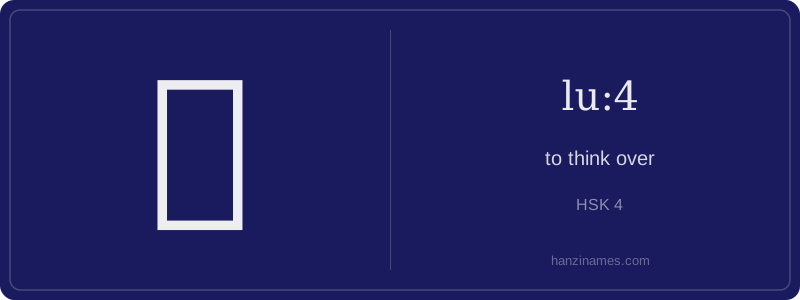
In modern Chinese, 虑 appears most frequently in formal and written contexts—especially in compound words expressing careful consideration, caution, or concern. It’s central to HSK 4 vocabulary and occurs in high-frequency phrases like ‘考虑’ (kǎolǜ, ‘to consider’) and ‘忧虑’ (yōulǜ, ‘to worry’). The idiom ‘深谋远虑’ (shēnmóuyuǎnlǜ, ‘deep planning and far-sighted consideration’) is cited in official media and leadership speeches to praise strategic governance. Historically, 虑 appears over 200 times in the *Analects* and *Mencius*, always denoting purposeful, morally grounded reflection.
The current simplified form 虑 derives from the traditional 虑 (same pronunciation), which evolved from the seal script character combining 虍 (tiger-head, symbolizing vigilance) and 心 (heart/mind). This documented structural origin reflects the character’s semantic core: alert, mindful cognition—not passive thought, but active, watchful deliberation.
Imagine a quiet Beijing teahouse on a rainy afternoon. A university student named Lin sits by the window, notebook open, chewing her pen—her brow furrowed as she weighs whether to accept an internship in Shenzhen or stay in Beijing for graduate entrance exams. Her teacher once told her: '凡事预则立,不预则废' (‘Preparation ensures success; lack of foresight invites failure’). That ‘foresight’—the careful, deliberate mental process—is exactly what 虑 captures: not just thinking, but thoughtful, anticipatory reflection.
The character 虑 belongs to the 心 (heart/mind) radical family, signaling its deep connection to inner cognition—not mere observation, but internal deliberation. Its ten strokes include the simplified form of the ancient ‘tiger’ component (虍), historically linked to vigilance and alertness. In classical texts like the *Book of Rites*, 虑 appears in phrases like ‘思虑’ (sīlǜ), meaning ‘deliberate thought’, underscoring its long-standing role in ethical and strategic decision-making.
Today, 虑 retains this weighty, reflective nuance. It rarely stands alone but pairs with verbs like 思 (think) or nouns like 安 (peace) to form compounds that express measured judgment—e.g., 担心 (dānxīn, ‘to worry’) implies concern born of considered evaluation, not panic. Mastering 虑 means grasping how Chinese values contemplative prudence: not hesitation, but wisdom earned through mental rehearsal before action.
Example Sentences
Common Compounds
Similar Characters — Don't Mix These Up
Your First Step into Chinese Culture: Get a Chinese Name
Every journey into Chinese begins with a name. Use our free Chinese name generator to create a meaningful, personalized Chinese name that fits you perfectly.
Get My Chinese Name →