招
Character Story & Explanation
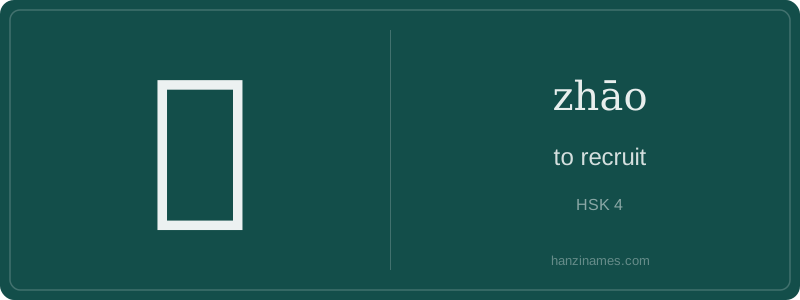
In daily life, 招 appears ubiquitously in job advertisements (招聘, zhāopìn), university enrollment notices (招生, zhāoshēng), and even martial arts manuals (招式, zhāoshì—‘technique’). Historically, the Tang Code (653 CE) used 招 in statutes regulating military conscription and official recruitment. The idiom 招兵买马 (zhāo bīng mǎi mǎ, ‘recruit soldiers and buy horses’) dates to the Three Kingdoms period, signifying preparation for power struggle—and remains common in business metaphors today.
The character’s form is not pictographic but phono-semantic: 扌 (hand radical) signals action; 召 (zhào/zhāo) provides sound and reinforces meaning—'to summon'. No oracle bone or bronze inscription bears this exact form; it stabilized in seal script (c. 3rd century BCE). Today, Chinese people see 招 first on job boards, campus bulletin boards, or WeChat recruitment posts—always signaling an open, intentional call for participation.
As an archaeologist brushing dust from a Han dynasty bamboo slip, I find 招 etched not as a static symbol—but as a dynamic gesture frozen in time. Its 扌 (hand) radical reveals intentionality: a hand reaching out, beckoning, summoning. The 召 component, historically linked to 'summoning by decree', suggests authority and purpose—not random attraction, but deliberate invitation. This character emerged when states needed administrators and armies required soldiers: recruitment was ritualized, formal, and often inscribed on official documents.
The eight strokes form a compact yet assertive shape—no flourish, no ambiguity. Early clerical script versions show clear separation between the hand and the phonetic-semantic 召, confirming its function as a verb of directed action. Unlike pictographs of natural objects, 招 is a semantic compound born of bureaucracy and human organization—its meaning anchored in social structure, not landscape.
Modern excavations of Tang-era Dunhuang manuscripts reveal 招 used in military conscription orders and temple donation appeals—always implying agency, legitimacy, and response expected. It never means passive 'appearance' (that’s 朝 or 昭); it demands reciprocity: someone must answer the call. To read 招 is to witness ancient China’s administrative pulse—the hand that writes the edict, the voice that commands presence, the system that turns intention into enrollment.
Example Sentences
Common Compounds
Similar Characters — Don't Mix These Up
Your First Step into Chinese Culture: Get a Chinese Name
Every journey into Chinese begins with a name. Use our free Chinese name generator to create a meaningful, personalized Chinese name that fits you perfectly.
Get My Chinese Name →