拾
Character Story & Explanation
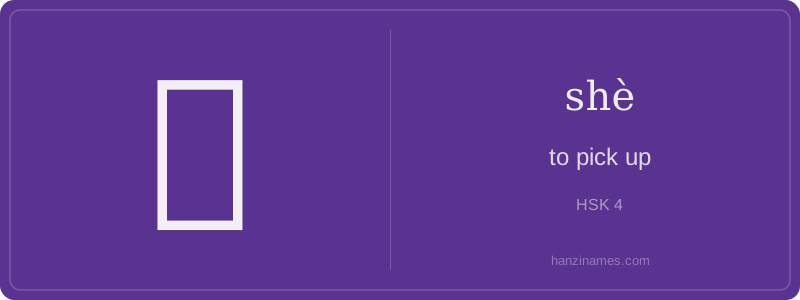
拾 is widely used in modern Mandarin for 'to pick up' — from捡拾 litter (jiǎnshí) to 拾金不昧 ('find money and return it honestly', a celebrated moral phrase). It appears in the HSK 4 idiom 拾级而上 (shèjí ér shàng), meaning 'to ascend step by step', often describing scholarly progress or gradual success. Historically, this phrase dates to Tang–Song dynastic texts describing temple staircases and Confucian self-cultivation.
The character is not pictographic. Its earliest attested form (in seal script, c. 3rd century BCE) already combines 扌 (hand action) and 十 (phonetic component). No oracle bone or bronze inscriptions contain 拾 — it emerged later as a phono-semantic compound. Today, Chinese people commonly see it on public service posters urging citizens to 拾起垃圾 ('pick up trash') or in news headlines about '拾荒者' (shíhuāngzhě, informal recyclers who collect discarded items).
Hi students! Today we’re learning 拾 (shè/shí), a Level 4 HSK character with 9 strokes and the hand radical 扌 — which tells us it’s an action done with the hands. Though its classical meaning is 'to ascend in light steps' (like climbing stairs gracefully), modern usage focuses on 'to pick up' or 'to collect'. Don’t be surprised by the dual pronunciation: shí is common in everyday speech (e.g., 拾起), while shè appears in formal, literary, or compound words like 拾级而上 ('ascend step by step').
This character beautifully shows how Chinese evolves: its original poetic sense of graceful ascent lives on in idioms and written language, while its practical meaning — picking things up — dominates daily use. Notice how the right side 十 looks like the number 'ten', but here it’s purely phonetic (a sound hint for shí/shè), not numeric. That’s why context matters so much!
As a teacher, I encourage you to practice writing 拾 slowly, following stroke order: start with the hand radical (three strokes: horizontal, vertical, then lift-and-curve), then build 十 carefully. Say both pronunciations aloud — shí for 'pick up', shè for 'ascend lightly'. And remember: in exams and real life, 拾 almost always appears in compounds, never alone. So mastering words like 拾取 or 拾级而上 will serve you far better than memorizing isolated definitions.
Example Sentences
Common Compounds
Similar Characters — Don't Mix These Up
Your First Step into Chinese Culture: Get a Chinese Name
Every journey into Chinese begins with a name. Use our free Chinese name generator to create a meaningful, personalized Chinese name that fits you perfectly.
Get My Chinese Name →