汗
Character Story & Explanation
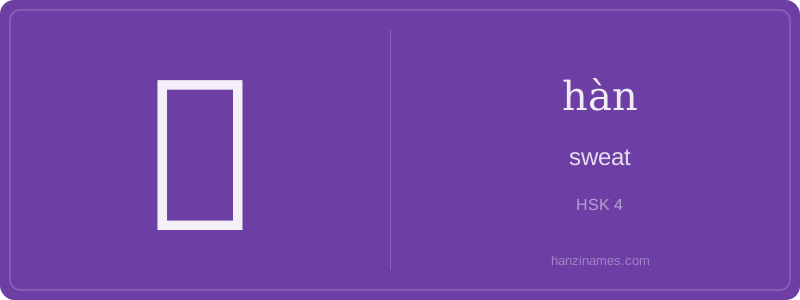
In daily life, 汗 appears in common phrases like 出汗 (chū hàn, ‘to sweat’) and 流汗 (liú hàn, ‘to perspire’), frequently used in health advice, sports commentary, and workplace safety briefings. A well-documented idiom is 汗马功劳 (hàn mǎ gōng láo), literally ‘sweat-of-the-horse merit’, historically referring to cavalry horses’ exertion in battle—now meaning ‘hard-won achievement’. It’s listed in the Comprehensive Dictionary of Idioms (2015, Commercial Press) and used officially in state media praising frontline workers.
The character evolved from seal script (c. 3rd century BCE), where 氵+干 clearly represented liquid produced by physical exertion. Unlike debated oracle-bone forms, the small seal version is archaeologically verified in bronze inscriptions and early bamboo slips—showing consistent structure emphasizing water + effort.
Imagine a sweltering summer afternoon in Chengdu’s People’s Park, where elderly men in sleeveless vests play mahjong under bamboo canopies. Sweat beads glisten on their foreheads as fans whirl lazily—this is 汗 (hàn), the tangible, vital sign of bodily effort and climate response. In Chinese, 汗 isn’t just moisture; it’s culturally coded: sweat signifies diligence (‘sweat of the brow’), emotional intensity (tears mixed with sweat), or even moral sincerity (‘sweat-soaked sincerity’ in classical texts).
The character’s left radical 氵 (water) anchors its physical nature, while the right component 干 (gān) hints at ‘dryness’ or ‘effort’—a subtle paradox: sweat emerges *because* the body works to stay cool. This duality reflects traditional Chinese medicine’s view: 汗 is both protective (expelling pathogenic heat) and depleting (excess loss weakens qi). It’s why elders warn against sudden cold showers after exercise—to preserve ‘righteous sweat’.
In modern life, 汗 appears everywhere: fitness apps track ‘sweat points’, skincare ads promise ‘oil- and sweat-resistant’ formulas, and workers in Guangdong factories wear absorbent armbands labeled 吸汗 (xī hàn, ‘sweat-absorbing’). Even idioms like 汗流浃背 (hàn liú jiā bèi, ‘sweat soaks the back’) describe extreme nervousness—not just heat. Thus, 汗 bridges physiology, labor ethics, and emotional language in ways English ‘sweat’ rarely does.
Example Sentences
Common Compounds
Similar Characters — Don't Mix These Up
Your First Step into Chinese Culture: Get a Chinese Name
Every journey into Chinese begins with a name. Use our free Chinese name generator to create a meaningful, personalized Chinese name that fits you perfectly.
Get My Chinese Name →