硕
Character Story & Explanation
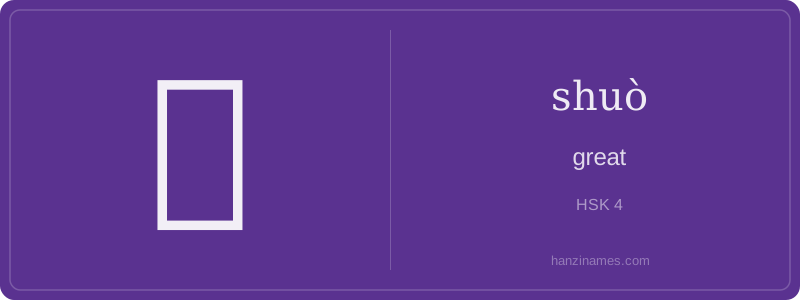
硕 is widely used in modern Chinese education and official language — most notably in 硕士 (shuòshì), meaning 'master’s degree', a term standardized nationwide since China’s higher education reforms in the 1980s. It also appears in formal titles like 硕学 (shuòxué), meaning 'erudite scholar', and historical documents referring to exceptional talent (e.g., in imperial examination records). The phrase 硕果累累 (shuòguǒ lěilěi) — 'abundant fruits' — is a common idiom praising remarkable, tangible achievements.
The character evolved from seal script, where 石 (stone) + 页 (originally depicting a human head with emphasis on dignity) combined to suggest 'weighty, venerable presence'. Though not a pictograph, its structure reflects Confucian values linking knowledge, moral stature, and permanence — much like stone. Today, Chinese students proudly display their 硕士学位证书 (Master’s Degree Certificate), making 硕 a real-life milestone marker.
Hi students! Today we’re learning the character 硕 (shuò), which means 'large' or 'great' — but not just any kind of big. It carries a sense of impressive, dignified bigness, often used for achievements, titles, or qualities that inspire respect. Think of it as 'big' with gravitas — like a grand accomplishment or an outstanding person. It’s not for describing a large watermelon; it’s for a major academic degree or a monumental contribution.
This character belongs to HSK Level 4, so you’ll encounter it in intermediate reading and formal contexts. Its radical is 石 (shí), meaning 'stone', which hints at solidity and weight — fitting for something substantial and enduring. The right side, 页 (yè), originally meant 'page' or 'leaf' (as in a book), but here it’s a phonetic component helping with pronunciation. Together, they form a character rooted in dignity and scale.
Don’t confuse 硕 with casual synonyms like 大 (dà) or 巨 (jù). While those mean 'big' broadly, 硕 is reserved for elevated, often scholarly or institutional contexts. You’ll see it most frequently in education (e.g., 硕士 — master’s degree), official honors, or classical-style descriptions of virtue or achievement. Mastering this character helps you read university brochures, news headlines about national awards, and even literary essays — all while sounding more natural and precise.
Example Sentences
Common Compounds
Similar Characters — Don't Mix These Up
Your First Step into Chinese Culture: Get a Chinese Name
Every journey into Chinese begins with a name. Use our free Chinese name generator to create a meaningful, personalized Chinese name that fits you perfectly.
Get My Chinese Name →