秀
Character Story & Explanation
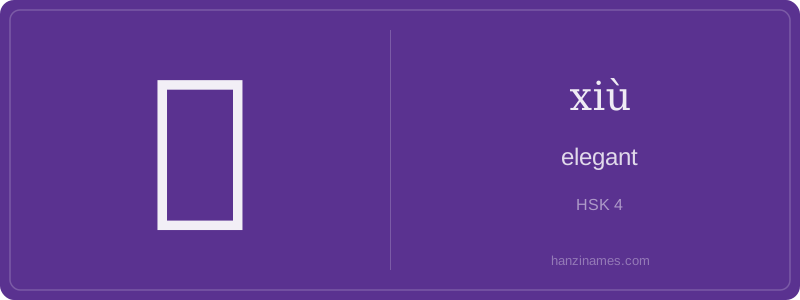
秀 has been used for over two millennia in classical texts like the Book of Songs (Shījīng), where it described luxuriant grain — symbolizing virtue and talent. Today, it appears in formal and colloquial contexts alike: in idioms like 秀外慧中 (xiù wài huì zhōng, 'elegant outwardly, wise inwardly'), in academic praise ('a 秀 student'), and even in internet slang like 秀恩爱 (xiù ēn’ài, 'show off one’s romance'). It’s also common in names and titles — e.g., the famous Tang dynasty poet Du Fu once praised a scholar as 'the most 秀 of his generation'.
The character’s form combines 禾 (grain) and 及 (jí, 'to reach'). In bronze inscriptions and early seal script, 秀 depicted ripe grain stalks rising above others — literally 'standing out among the crops'. This visual origin is well-documented in authoritative sources like the Kangxi Dictionary and modern paleography studies. No oracle-bone version survives, but its agricultural root is clear and undisputed.
Hi students! Let’s explore 秀 (xiù), a lovely character meaning 'refined', 'elegant', 'graceful', or 'beautiful'. It’s an HSK Level 4 word — not too early, but very useful! Notice its radical 禾 (hé), which means 'grain' or 'cereal plant'. This hints at its original agricultural sense: in ancient Chinese, 秀 described rice or millet plants that were lush, tall, and flourishing — a sign of excellence and natural beauty. So from crops to people, the idea evolved: what’s outstanding, healthy, and aesthetically pleasing can be called 秀.
This character carries positive, often gentle connotations — never flashy or loud, but quietly impressive. Think of someone with poised manners, delicate features, or refined artistic taste: that’s 秀. Unlike characters like 美 (měi, 'beauty') which is more general, 秀 emphasizes cultivated grace and inner distinction. It’s also used playfully in modern slang — more on that later!
Remember: 秀 is pronounced xiù (fourth tone — sharp and falling), not xiū or xiū. Its seven strokes are simple but precise: start with the 禾 radical (left), then add the 及 part (right) — like ‘reaching excellence’. Practice writing it slowly, paying attention to stroke order. And don’t confuse it with similar-looking characters like 秀 vs. 透 (tòu, 'penetrate') — we’ll clarify that soon!
Example Sentences
Common Compounds
Similar Characters — Don't Mix These Up
Your First Step into Chinese Culture: Get a Chinese Name
Every journey into Chinese begins with a name. Use our free Chinese name generator to create a meaningful, personalized Chinese name that fits you perfectly.
Get My Chinese Name →