完全
How to Say
👀 0
How to Write
Meaning: completely
How to Understand
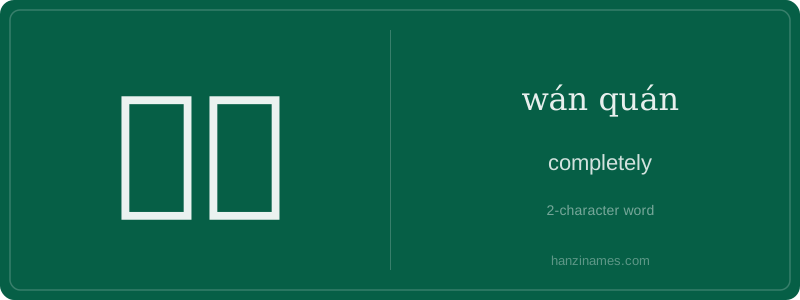
完全
完全 (wán quán) is an adverb meaning 'completely' or 'entirely.' It emphasizes the full extent of something, indicating that there is no partiality or limitation.
The character 完 (wán) originally meant 'to complete' or 'to finish,' while 全 (quán) means 'whole' or 'entire.' Together, they convey the idea of something being fully realized or total in nature.
完全 is commonly used in daily conversations to stress that something has been done entirely or that a condition is fully met. It can also appear in expressions like 完全正确 (wán quán zhèngquè), meaning 'completely correct,' or 完全不 (wán quán bù), meaning 'not at all.'
Example Sentences
他完全不懂这个概念。
He completely doesn't understand this concept.
这个计划完全失败了。
This plan completely failed.