另外
How to Say
👀 0
How to Write
Meaning: In addition
How to Understand
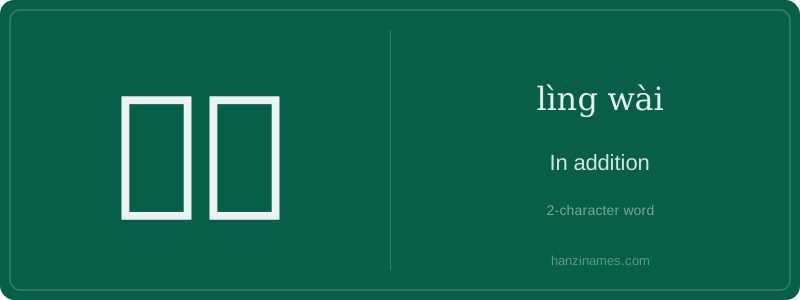
另外
另外 is an adverb meaning 'in addition' or 'furthermore.' It is used to introduce additional information, ideas, or points in a conversation or text.
The character 另 (lìng) originally meant 'other' or 'another,' while 外 (wài) means 'outside' or 'external.' Together, they form a phrase that conveys the idea of 'in addition to the above' or 'furthermore.'
Another common usage is to add another point or detail, often in spoken or written Chinese. It can also be used in contexts like 'another thing' or 'additionally.' In daily conversations, it helps to make speech more fluid and logical by connecting ideas or listing items.
Example Sentences
另外,我还需要买一些水果。
In addition, I also need to buy some fruits.
另外,这个项目还有其他的挑战。
Furthermore, this project has other challenges.