出去
How to Understand
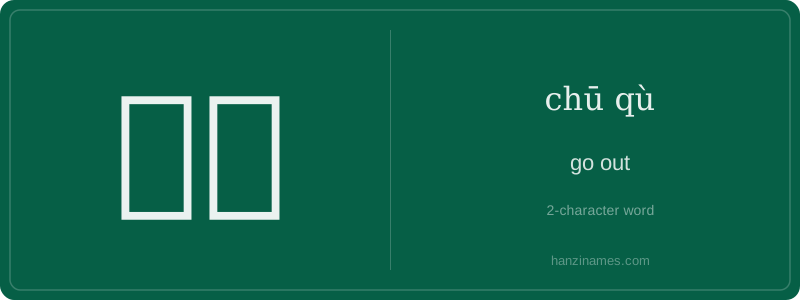
出去 means 'to go out' or 'to leave' in Chinese. It is commonly used to describe the action of leaving a place, such as home, office, or a building. Unlike other similar verbs, 出去 emphasizes the physical movement from an interior space to an exterior one.
The character 出 (chū) means 'to go out' or 'to emerge,' while 去 (qù) means 'to go.' Together, they form a verb that conveys the idea of moving from inside to outside, often with a sense of departure or movement away from a familiar environment.
出去 is widely used in daily conversations, such as when someone says they are going out for a walk, dinner, or to run errands. It can also be used metaphorically, like in the phrase 出去玩 (to go out and play), which implies a more relaxed or recreational activity outside of routine tasks.