还是
How to Understand
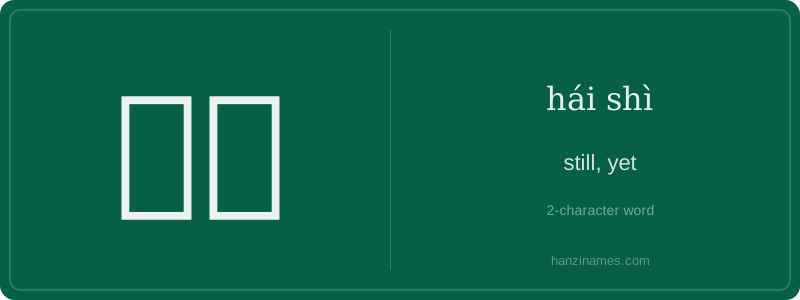
还是 is a conjunction used to express contrast or to indicate that something remains the same despite changes or expectations. It often conveys a sense of 'still' or 'yet,' and is commonly used in questions or statements to highlight persistence or unchangeability.
The character 还 (hái) means 'still' or 'yet,' while 是 (shì) is a verb meaning 'to be.' Together, 还是 emphasizes the continued state of something, often with a nuance of surprise or expectation not being met.
在日常对话中,还是 is frequently used in situations where someone is questioning or expressing doubt about a situation. For example, it can be used to ask if something has changed or to confirm that a condition remains unchanged. It is also found in idioms and expressions that reflect Chinese cultural values like perseverance and consistency.