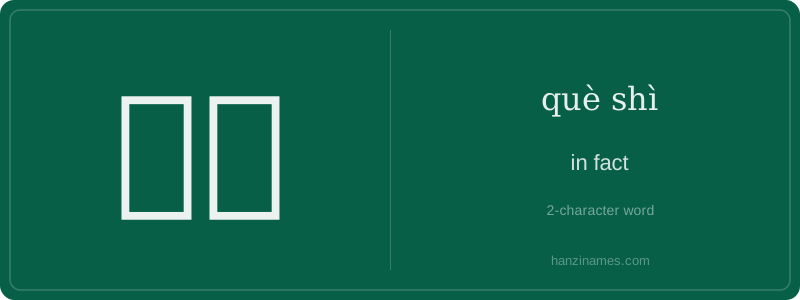
却是
How to Say
👀 0
How to Write
Meaning: in fact
How to Understand
却是
却是 is an adverbial phrase that means 'in fact' or 'indeed,' often used to emphasize a contrast or to reveal a surprising truth. It highlights the actual situation, often contrasting with expectations or previous statements.
The character 却 (què) originally meant 'to refuse' or 'to decline,' but in this context, it functions as a conjunction indicating contrast. 是 (shì) means 'to be' or 'is.' Together, 却是 emphasizes the reality of a situation despite prior assumptions.
It is commonly used in spoken and written Chinese to correct misunderstandings or highlight unexpected outcomes. For example, when someone says something surprising, 却是 can be used to underline the actual truth, making it an essential expression for nuanced communication.
Example Sentences
他看起来很严肃,却是个非常幽默的人。
He looks serious, but he is actually very humorous.
这道菜看起来普通,却是厨师的拿手好戏。
This dish looks ordinary, but it's the chef's specialty.