正确
How to Say
👀 0
How to Write
Meaning: Correct
How to Understand
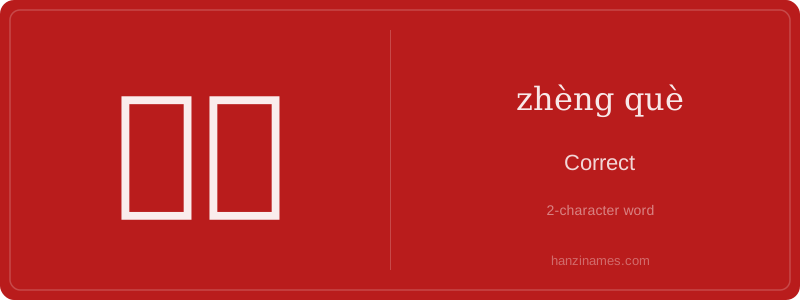
正确
正确 (zhèng què) means 'correct' or 'right' in English. It describes something that is accurate, true, or in line with facts or standards. It is often used to indicate that an answer, action, or statement is valid and free from error.
The character 正 (zhèng) originally meant 'upright' or 'proper,' while 确 (què) means 'certain' or 'definite.' Together, they convey the idea of something being accurately aligned with truth or correctness.
正确 is commonly used in academic, professional, and everyday contexts. For example, it can describe a correct answer in a test, a correct procedure in a process, or a correct way of doing something. It is also used in expressions like “正确的做法” (zhèngquè de zuòfǎ), meaning 'the correct way to do something.'
Example Sentences
这个问题的正确答案是42。
The correct answer to this question is 42.
他按照正确的步骤完成了实验。
He completed the experiment according to the correct steps.