弟子
How to Understand
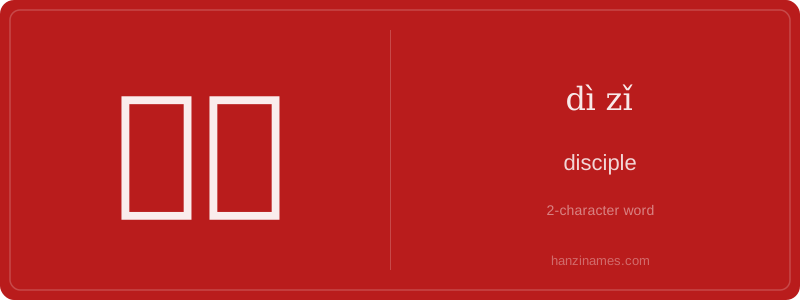
弟子 (dì zǐ) is a noun meaning 'disciple' or 'follower,' typically referring to someone who learns from a teacher, especially in the context of traditional Chinese philosophy, religion, or martial arts. It emphasizes a formal relationship between a teacher and student, often implying respect, obedience, and a long-term learning process.
The character 弟 (dì) originally meant 'younger brother' or 'companion,' while 子 (zǐ) is a suffix meaning 'child' or 'son.' Together, they form a term that conveys a close, respectful relationship between a mentor and their student, reflecting Confucian ideals of hierarchy and reverence for knowledge.
弟子 is commonly used in religious or philosophical contexts, such as in Buddhism or Taoism, where it refers to a follower of a master. In modern usage, it can also describe someone who follows a particular style or tradition, such as a martial artist or artist. It is often used with a sense of honor and humility.