不足
How to Say
👀 0
How to Write
Meaning: insufficiency
How to Understand
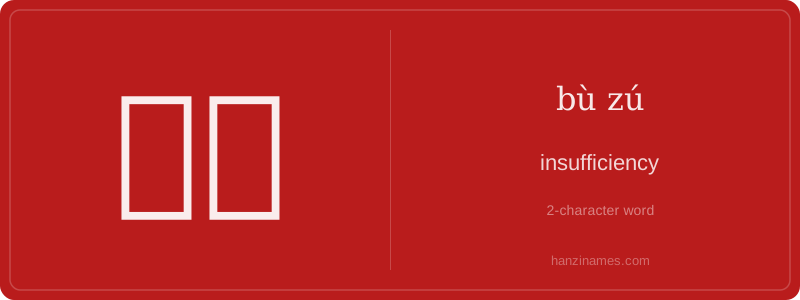
不足
不足 means 'insufficiency' or 'lack,' referring to something that is not enough in quantity, quality, or degree. It often implies a shortcoming or deficiency that needs improvement.
The character 不 (bù) means 'not,' and 足 (zú) means 'enough' or 'sufficient.' Together, they form a negation of sufficiency, emphasizing the absence of what is needed or expected.
不足 is commonly used in both formal and informal contexts, such as discussing resource limitations, skill gaps, or performance shortcomings. It is also found in idioms like 取长补短 (qǔ cháng bǔ duǎn), meaning 'to take the strengths and compensate for the weaknesses.'
Example Sentences
这个项目存在一些不足之处,需要进一步改进。
There are some shortcomings in this project that need further improvement.
他的经验不足,难以胜任这份工作。
His experience is insufficient to handle this job.