只好
How to Say
👀 0
How to Write
Meaning: have to
How to Understand
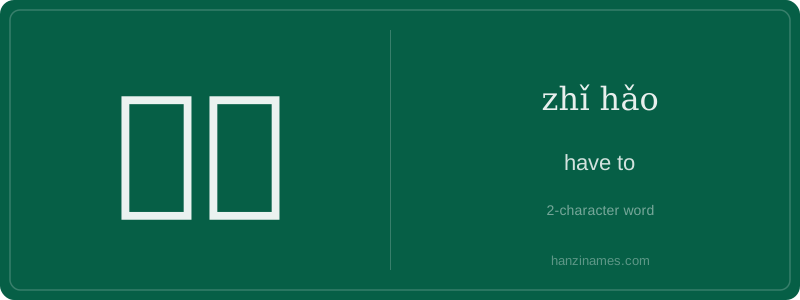
只好
只 (zhǐ) means 'only' or 'just,' and 好 (hǎo) means 'good' or 'well.' Together, 只好 (zhǐ hǎo) expresses a sense of necessity or resignation, often translated as 'have to' or 'must.' It implies that there is no better option available.
The character 只 emphasizes limitation, suggesting that only one choice exists, while 好 adds a sense of acceptance or adjustment. This phrase is commonly used in situations where someone is forced into a situation without alternatives.
在日常交流中,只好看似简单,但常用于表达无奈或妥协。例如,在面对困难时,人们会说“只好这样了”,表示接受现状。这种用法体现了中文中对现实的务实态度。
Example Sentences
他只好放弃了这个机会。
He had to give up this opportunity.
我们只好明天再试一次。
We have to try again tomorrow.