最近
How to Understand
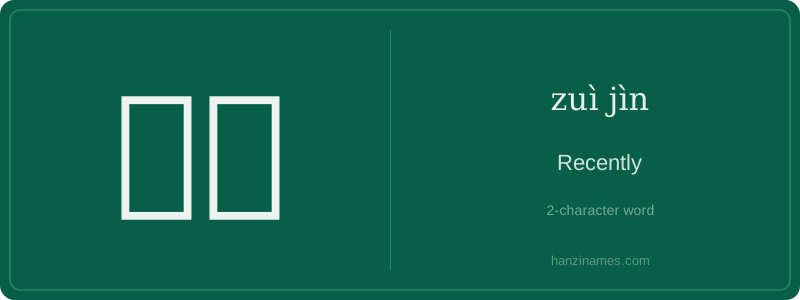
最近 (zuì jìn) means 'recently' or 'lately' in English. It refers to a period of time that is close to the present moment, often used to describe events or actions that have happened not long ago.
The character 最 (zuì) means 'most' or 'extreme,' while 近 (jìn) means 'near' or 'close.' Together, they form a term that emphasizes the closeness in time to the current moment, making it distinct from general past time expressions like 'before' or 'ago.'
最近 is commonly used in daily conversations to talk about recent events, such as news, changes, or personal experiences. It can also be used in formal contexts, such as in reports or academic writing, to indicate a recent timeframe. In Chinese culture, timing and context are important, so using 最近 helps clarify when an event occurred relative to the present.