立场
How to Understand
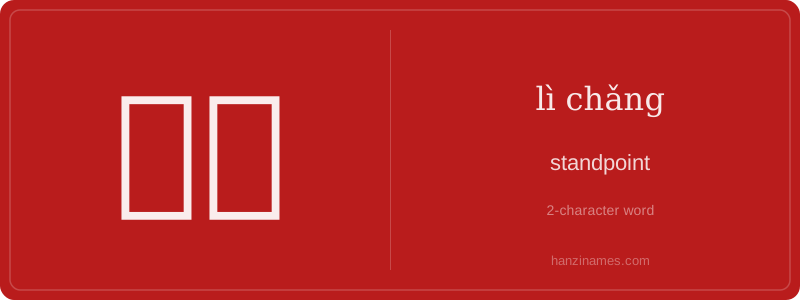
立场 refers to a person's position, viewpoint, or stance on an issue. It emphasizes a firm belief or perspective, often in the context of debate, politics, or personal values. Unlike 'opinion,' which can be more flexible, 立场 implies a stronger, more defined position.
The character 立 (lì) means 'to stand' or 'to establish,' while 场 (chǎng) originally meant a public square or space. Together, they metaphorically suggest a place where one stands or takes a position, especially in discourse or argumentation.
在中文中,立场 is commonly used in political, social, and ethical discussions. For example, a politician may emphasize their 立场 on a policy, or a group may express their 立场 on a controversial topic. Understanding someone's 立场 helps in predicting their behavior or decisions.