太子
How to Understand
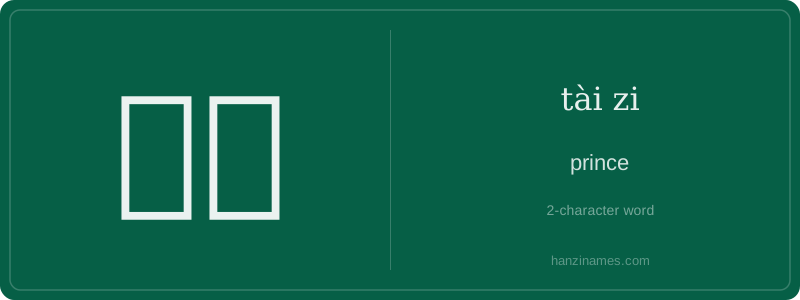
太子 (tài zi) refers to the son of a king or emperor who is designated as the heir to the throne. It specifically denotes the crown prince, the official successor to the imperial position, and is distinct from other royal sons who may not have such a title.
The character 太 (tài) originally meant 'great' or 'exalted,' and it was used to denote high status. 子 (zǐ) means 'son' or 'child.' Together, they form a term that signifies the most important son in a royal family, especially one who is set to inherit the throne.
In historical contexts, the term was widely used in China, Korea, and other East Asian cultures. Today, it is primarily encountered in historical discussions or in cultural references. In modern Chinese, the term may be used more metaphorically or in literature, but it retains its formal and respectful connotation.