老百姓
How to Say
👀 0
How to Write
Meaning: common people
How to Understand
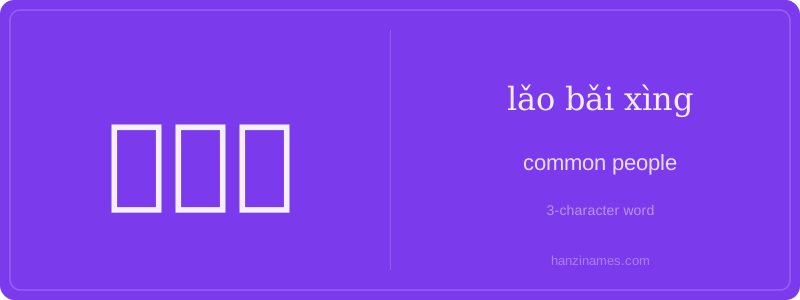
老百姓
老百姓 refers to the common people or ordinary citizens, especially in contrast to the elite or government officials. It emphasizes the everyday individuals who make up the majority of a society.
The character 老 (lǎo) means 'old' or 'long-standing,' 百 (bǎi) means 'hundred,' and 姓 (xìng) means 'surname' or 'family name.' Together, they form a term that literally translates to 'a hundred surnames,' symbolizing all the different families and people in a community.
Usage of 老百姓 often conveys a sense of relatability and connection to the general public. It is commonly used in media, politics, and daily conversation to refer to the average person's perspective or needs. For example, a government policy might be said to serve the interests of 老百姓.
Example Sentences
老百姓的生活越来越好了。
The lives of common people are getting better and better.
老百姓对这个新政策反应很积极。
The common people have a very positive reaction to this new policy.