正要
How to Say
👀 0
How to Write
Meaning: about to
How to Understand
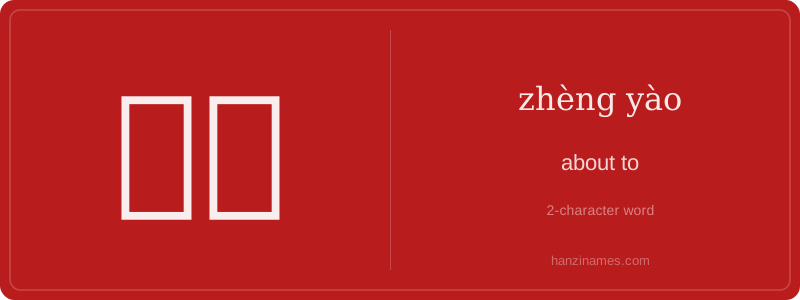
正要
正要 is an adverbial phrase meaning 'about to' or 'on the verge of.' It is used to indicate that an action is about to happen, often followed by a verb that describes the imminent action.
The character 正 (zhèng) means 'correct,' 'right,' or 'just,' while 要 (yào) means 'to want,' 'to need,' or 'to be going to.' Together, they form a phrase that conveys the idea of something being on the brink of occurring.
This expression is commonly used in daily conversations to express anticipation or immediacy. For example, someone might say, '我正要出门' (I'm about to leave) to indicate they are just about to go out. It's also used in more formal contexts, such as in literature or news reporting, to describe actions that are about to take place.
Example Sentences
我正要离开,你来了。
I was about to leave when you arrived.
他正要开始演讲时,突然停电了。
He was about to start his speech when the power suddenly went out.