共和
How to Understand
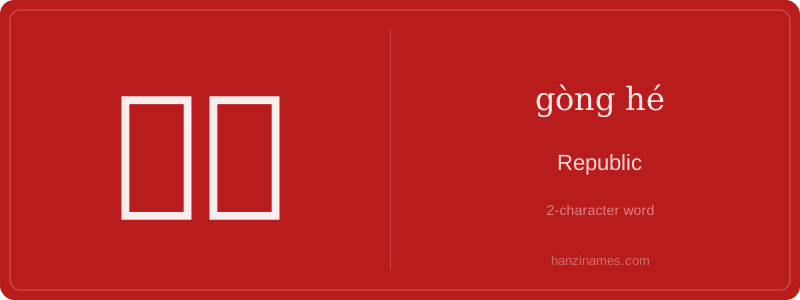
共和 (gòng hé) is a Chinese term that directly translates to 'republic' in English. It refers to a form of government where power is held by the people, either directly or through elected representatives. Unlike monarchies or dictatorships, a republic emphasizes popular sovereignty and the rule of law.
The character 共 (gòng) means 'common' or 'shared,' while 和 (hé) means 'harmony' or 'peace.' Together, they convey the idea of a society governed by shared values and collective agreement, rather than by a single ruler or elite group.
共和 is commonly used in political contexts, especially when discussing modern governments. It is often associated with ideals such as democracy, equality, and civic participation. In China, the term is used in the official name of the country, 中华人民共和国 (Zhōnghuá Rénmín Gònghéguó), meaning the People's Republic of China.